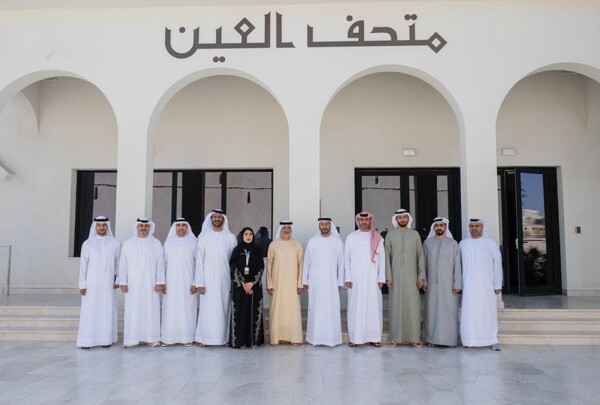
The current geopolitical situation imposes additional pressures that require a coordinated and rapid response. The pivotal role played by the Food and Agriculture Organization (FAO) in uniting and directing regional efforts to protect and ensure the sustainability of food security is highly valued. The United Arab Emirates, relying on the wise leadership of its leadership, reaffirm their firm commitment to advancing plans for the sustainability of agricultural systems and will always remain an innovative and pioneering model in employing advanced technology and innovation to empower this vital sector and overcome obstacles. By presiding over this regional conference, the UAE aims to lead efforts to drive innovative solutions and deepen frameworks of constructive cooperation with the FAO and all countries in the region that share the same challenges with us. In turn, the Assistant Director-General of the FAO and its Regional Representative for the Near East and North Africa, Abdul Hakim El Waer, stressed in his speech the importance of intensifying coordinated efforts to enhance the resilience of agricultural and food systems in the region in the face of interconnected pressures, including climate change, water scarcity, economic fluctuations, and conflicts. He stated that the Near East and North Africa region stands at a critical juncture, where interconnected crises are placing unprecedented pressure on agricultural and food systems, and that the escalation of climate shocks, severe water scarcity, geopolitical tensions, and economic instability are not only disrupting supply chains but also undermining national food security and the livelihoods of millions, emphasizing that coordinated and urgent political action is no longer a choice but an inevitable necessity. He added that the challenges we face are great, but our collective capacity to confront them is no less important. The UAE presides over the 38th session of the Food and Agriculture Organization of the United Nations (FAO) Regional Conference for the Near East and will host the upcoming ministerial meeting on April 21 in the city of Al Ain. This premier regional event is gaining exceptional momentum, coinciding with the second edition of the 'UAE AgriTech,' which underscores the country's leading role in steering regional efforts towards the sustainability of agricultural and food systems. This announcement was made on the sidelines of the preparatory meeting for senior officials, which marks a crucial stage for laying the technical and policy foundations, discussing existing challenges, and shaping the recommendations that will be presented and adopted during the ministerial meeting in the UAE. This year's session is held under the theme 'Innovation for Transforming Agricultural and Food Systems,' providing a platform for members to coordinate common priorities and enhance regional cooperation over the next two years. The preparatory meeting for senior officials, chaired by the Assistant Minister of Climate Change and Environment Mohammed Saeed Al Nuaimi, was attended by over 200 representatives from various countries in the Near East and North Africa. The senior officials' meeting is the primary preparatory stage for the upcoming ministerial meeting, offering a strategic platform to discuss challenges, identify regional priorities, and formulate actionable recommendations. Discussions focused on vital areas, including enhancing supply chains, diversifying food sources, improving logistics services, and leveraging innovative solutions. Mohammed Saeed Al Nuaimi stated: 'We meet today at a time marked by numerous changes that demand exceptional action from us to address the unprecedented challenges affecting our region and food supply chains, which exacerbate climate challenges, water scarcity, and land depletion that our agricultural system faces. Together, we will work to build agricultural and food systems that meet the needs of populations, communities, and the future.' Food insecurity remains a source of grave concern across the region. According to the FAO's 'Regional Overview of Food Security and Nutrition in the Near East and North Africa in 2025,' approximately 77.5 million people, or 15.8% of the region's population, suffered from hunger in 2024, with four in every ten people experiencing moderate or severe levels of food insecurity. The Near East and North Africa region is the world's most water-scarce, where the agricultural sector utilizes about 85% of the extracted freshwater resources, according to the Regional Initiative on Water Scarcity in the Near East and North Africa. Globally, up to one-third of the food produced is lost or wasted, representing a drain on resources and a missed opportunity to enhance food availability and improve the efficiency of these systems. Despite these challenges, countries in the region continue their efforts to improve water resource management, enhance climate-resilient agriculture, and reform systems. Innovations and digital technologies are opening new horizons for modernizing agricultural and food systems, boosting productivity, and enabling more efficient decision-making. The senior officials' meeting provides a significant platform for members to review progress, exchange experiences and knowledge, identify regional priorities, and its outcomes will guide the work of the ministerial meeting and coordinate regional action. In this context, the FAO renewed its commitment to supporting its members through its strategic framework for the period 2021-2030, fostering the transformation of agricultural and food systems towards greater efficiency, inclusivity, sustainability, and resilience.