Experts and digital education initiative founders have stated that the traditional education system has become "disrupted" due to its slow pace of adapting to technological changes. They pointed out that education has become a fundamental issue in the digital age, available through unconventional tools and methods, which provides content creators with an opportunity to invest in these possibilities to offer innovative and effective educational content.
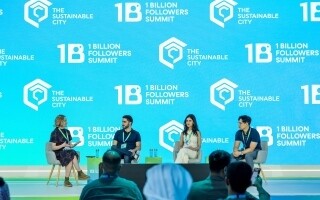
This was discussed during a session titled "Education is Disrupted: Here's How to Fix It" as part of the fourth edition of the Billion Followers Summit, the world's largest summit on the content creation economy, organized by the Media Office of the Government of the United Arab Emirates. The summit is hosted by the UAE over 3 days and concludes its activities on January 11 at the Emirates Towers, the Dubai International Financial Centre, and the Museum of the Future under the theme "Purposeful Content."
The session featured Julie Walsh Smith, CEO of the American company "Complexly" specializing in digital education; Arman Khidrallian, CEO and co-founder of "Mishkat"; Achina Miah, a content creator and founder of a virtual school in India that utilizes artificial intelligence; and Justin Sung, a teacher, doctor, and founder of numerous educational initiatives.
Julie Walsh Smith confirmed that their experience as a company specializing in digital education has shown that people of all ages have a passion and a continuous desire to learn, noting that they constantly strive to meet these aspirations. She stated that the traditional education system fails to keep up with technological changes, which has opened the door for content creators to offer innovative insights into modern education, taking into account its specific conditions and tools. She explained that successful digital education must be interactive, short, and simplified, as short educational videos today receive significant follow-up and interest from learners and knowledge seekers.
Arman Khidrallian indicated that technical and practical skills constitute a basic need in the current era, confirming that their platform works on producing educational content that brings these skills closer to learners. He said that the demand for learning is high, but learners need trusted guides and teachers, especially in light of the spread of misinformation on social media.
Achina Miah reviewed her experience in managing an AI-based school in India and delivering diverse educational content through her YouTube channel. She stated that this model places the traditional education system in direct confrontation with the "self-learning revolution" led by educational content creators, pointing out that this revolution fills the gaps and shortcomings in traditional education and meets the labor market's needs for required skills.
Justin Sung explained that he helps students explore the history of education, enabling them to achieve their personal goals and develop their internal motivation, which forms the core driver of any educational process. He confirmed that blending fun with information is the essence of the educational process, noting that the challenge does not lie in the difficulty of the academic material, but in the method of its presentation. He said that content creators have succeeded in attracting millions of learners to study languages, programming, and history by turning lessons into engaging visual stories capable of breaking the boredom barrier that students face in traditional classrooms.