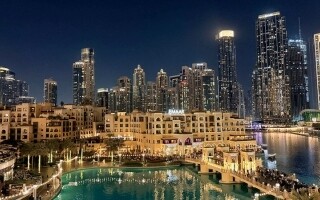
Cavendish Maxwell, a real estate consultancy firm, has confirmed that the fundamental economic underpinnings of Dubai are solid. The company, in a study obtained by 'Emirates Today', pointed out that the emirate's tourism market has shown exceptional resilience during periods of instability, recovering swiftly as conditions improve. The firm highlighted that Dubai's competitive advantages are not limited to the diversity of its global visitors and ease of access but also extend to continuous investment in physical infrastructure and interactive tourist attractions. It is anticipated that the sector will overcome market fluctuations in the short term while maintaining its long-term growth trajectory. In detail, Cavendish Maxwell stated that Dubai's tourism and hospitality sector achieved strong performance in 2025, driven by increasing demand from both local and international tourists, strategic air connectivity, and a growing number of global events. The total number of travelers reached 95.2 million, while the number of international visitors rose to 19.6 million, cementing the emirate's status as a leading global tourism hub. This momentum positively impacted the hotel sector, with occupancy rates and average daily room rates showing continuous growth throughout the year. The company added: 'Despite the geopolitical tensions in the region casting a shadow on travel patterns and visitor flows in the short term, Dubai's fundamental economic bases are solid. The emirate benefits from a diverse global visitor base spanning Europe, North America, Asia, and other regions, coupled with stable domestic demand, which supports relative stability amidst potential challenges.' The company continued: 'Historically, Dubai's tourism market has demonstrated exceptional resilience during periods of instability, recovering swiftly as conditions improve.' It explained that the city's competitive advantages are not confined to the diversity of its global visitors and accessibility but also include sustained investment in physical infrastructure and interactive tourist landmarks. The firm noted that with the expected delivery of 4,600 new hotel rooms by the end of the current year, mostly in the luxury and upscale segments, which saw strong growth in 2025, this trend is set to continue. The company also indicated a clear shift towards the premium segment in future hotel expansion plans. Future plans until 2028 show a notable inclination towards luxury (49.8%) and upscale (28.6%) categories, with limited additions only in the mid-scale and economy segments. This trend is expected to become even more pronounced in 2027, with luxury hotels projected to constitute about 68.4% of future supply. This increasing focus on premium projects reflects Dubai's broader standing as a distinguished global tourist destination, supported by strong demand from high-spending international tourists and the emirate's growing interest in experience and luxury-based hospitality concepts.