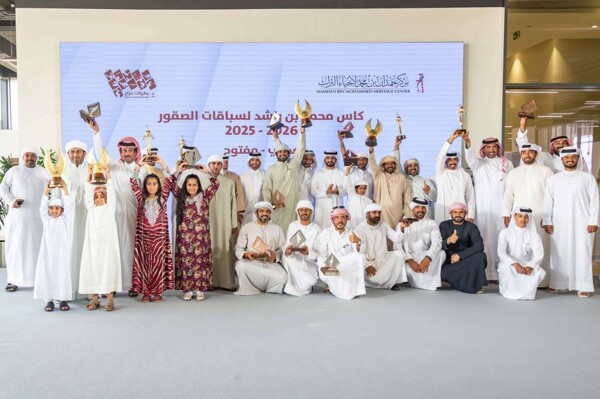
In cooperation with the Mohammed bin Rashid Library and with the participation of a select group of essayists, researchers, and journalists, the UAE Essay Award organized the UAE Essayists Forum, which discussed the evolution of this art form and its role in the cultural and media landscape, opening avenues for dialogue between creators and cultural institutions. The forum's program included a panel discussion titled "The Future of the UAE Essay," which reviewed the trajectory of the UAE essay and the transformations it has undergone amidst cultural and media changes, alongside a training workshop for young writers focused on developing writing, analysis, and opinion-forming skills in a professional style. The event also featured a professional program that allowed writers to connect with publishers and cultural institutions to explore future cooperation prospects, and a book exhibition that highlighted the most prominent publications of the UAE essay and its leading figures.
During the forum, held for the first time, the book "Essays from the First Cycle of the UAE Essay Award 2025" was launched. The book, in two volumes, includes 104 essays by participants, presenting models that reflect the authors' visions on addressing contemporary societal issues. Meanwhile, the award announced its readiness to announce the second cycle in mid-January 2026.
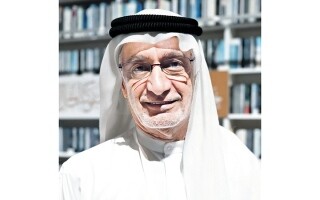
In an interview with "Al-Ittihad," Chairman of the UAE Essay Award's Board of Trustees, Dr. Abdelkhaleq Abdullah, said: "The award was established to keep pace with the bustling literary and cultural scene in the UAE, which is filled with events and pioneers." He affirmed: "Some believed that the UAE essay was one of the arts that had not received its fair share, for this reason, the UAE Essay Award was born to restore the essay's luster and grant it its literary and commemorative value, especially since we have pioneers and writers who have been continuing the journey of creativity for nearly 50 years." He added: "The first cycle of the award revealed a remarkable presence of writers from two generations, seasoned and new, despite the difficult conditions, the most prominent of which was that the essay should be within 1,000 words, yet we were surprised by the influx of creative experiences."
Abdullah also noted that the first cycle brought surprises related to the abundance and quality of participation, confirming: "The judging committees found many works that could only be appreciated, especially since the UAE is a land of awards and the capital of Arab awards, with more than 70 cultural and literary awards." He pointed out that the award came to complete, enrich, and enhance this landscape.
Regarding developments in the award's rules for the second cycle, Abdullah said: "We reviewed the first cycle and proposed categories that deserve celebration, including the creation of the 'Artistic Essay' category and the 'Promising Essayist' category for those under 18 years old. We also added the 'Resident Writer' category for those who write in Arabic about an Emirati issue, making the award's nine categories instead of six in the first cycle."
Member of the Mohammed bin Rashid Library Foundation's Board of Directors and member of the award's Board of Trustees, Jamal Al-Shahi, confirmed that the Mohammed bin Rashid Library is a partner to the UAE Essay Award and played a significant role in supporting this award. He said: "Undoubtedly, holding this forum for the first time was a fruit of this cooperation that will become annual. This came after UAE essayists gained an Arab dimension by publishing their works in Arab newspapers. Technology has also opened new doors for publication away from the classical method. The goal revolves around building a new generation that understands the techniques of essay writing correctly and presents an active presence in the cultural scene, for this reason, I see that the award gives participants an opportunity for a wider presence on all levels."
Al-Shahi emphasized that the UAE Essayists Forum is the most important event of the UAE Essay Award, describing the event as "a cultural festival for UAE essayists." He added: "There is no doubt that the art of journalistic essay has proven its existence alongside the novel, short story, and poetry, especially as a single essay can influence and shape public opinion. The UAE essay has managed to adapt to a diverse and evolving cultural scene, evidenced by the large number of UAE essayists in Arab newspapers." He considers the UAE Essay Award, the first of its kind in the region, now to have an institution and a platform that sponsors it.
Member of the award's Board of Trustees, Dr. Maryam Al-Hashemi, stated in an interview with "Al-Ittihad": "The award came to reconsider the concept of the essay within the cultural community and in the framework of rote learning, as collective consciousness often confines the essay to societal and political issues, whereas the goal is to shift awareness to the multiple forms and functions of the essay." She added: "Writing about a cinematic film or a cultural phenomenon can be an entry point to reading society, just as the essay does when it addresses the deep issues and transformations that the Arab society is going through, for example."
Al-Hashemi stressed that the participating Emirati pens did not neglect Arab issues but were rather in tune with and merged with Arab, national, and humanitarian issues. She confirmed that the Emirati critic is required to be familiar with all arts because "he does not have the luxury of specialization." She added: "Criticism continues to accompany literary developments and creative transformations in the UAE, for this reason, the critical essay remains present as a tool for elevating writing and developing analytical skills."
In his message to the new generation, Chairman of the UAE Essay Award's Board of Trustees, Dr. Abdelkhaleq Abdullah, indicated that social media platforms do not negate the written essay, and that the digital space is "an act of addition, not an act of negation." He affirmed: "I do not fear the absence of a reader or a writer, for this reason, I call for communication between the seasoned generation and the new generation—the future pioneers—who will elevate the UAE essay to the global level. The pioneers of the future are in the next generation."