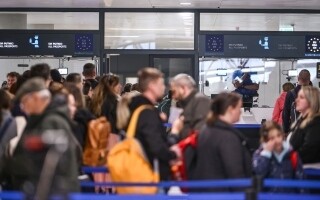
European borders have descended into chaos and confusion following the rollout of a new entry and exit system, which airlines have criticized as a "systematic failure," directly impacting passenger traffic across EU airports. The Entry/Exit System (EES) was officially launched on Friday, April 10, 2026, in all 29 Schengen Area countries. This is a digital system based on biometric data such as fingerprints and facial images, replacing traditional passport stamps with an electronic registration of entry, exit, and refusal of entry. From the first day of implementation, significant disruptions were recorded at airports, where passengers faced queues lasting up to three hours, leading to flight delays and cancellations for a large number of travelers. Airport Council International – Europe (ACI Europe) and Airlines for Europe (A4E) issued a joint statement confirming that the launch day saw "disruptions, delays, and flight cancellations," despite prior warnings of expected operational difficulties. Airlines for Europe later emphasized that what occurred cannot be considered mere "initial teething problems," but rather a "systematic failure" in the system's implementation, noting that airlines work to ensure flights depart on time, but the situation was beyond their control. The organization called on the European Commission and member states to immediately introduce flexibility in the system's operation, including the option for a partial or complete suspension until the end of the summer season if necessary. Milan's Linate Airport witnessed major chaos on Sunday, where 156 passengers were scheduled to board an EasyJet flight to Manchester, but only 34 managed to board, leaving 122 passengers behind after missing their flight due to long waits at border control points. EasyJet described the delays associated with the new system as "unacceptable," calling on border authorities to use the flexibility available to avoid further disruption for travelers. It is worth noting that the new system applies to non-EU travelers visiting the Schengen Area for short stays of up to 90 days within any 180-day period, as part of the Union's efforts to enhance border security amid growing concerns about its impact on the smooth flow of travel.