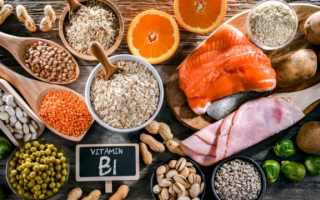
Vitamin B group plays essential roles in energy production, nerve support, and blood cell formation. Since the body does not store most of them in large quantities as they are excreted through urine, daily replenishment through food is important, according to a report on the VeryWellHealth health website. The report states that vitamin B is available in a wide range of foods: from animal proteins, to leafy vegetables, legumes, dairy products, and even some fortified foods. Here are 10 common options that can be practical alternatives to supplements for many people: 1) Beef liver. It is considered a 'nutritional bomb' for B vitamins, especially B12, in addition to high doses of B2, B3, B5, B6, B7, and B9. 2) Fatty fish and tuna. Salmon and tuna provide a good range of B vitamins, including B12, B6, and B3, with the added benefit of healthy fats in fatty fish. 3) Nutritional yeast. A popular choice among vegans, often fortified with B12. It also contains large amounts of B1, B2, B3, B6, and B9 and can be sprinkled on salads, pasta, or soup. 4) Spinach and leafy greens. Spinach is particularly rich in folic acid (B9), which is important for many vital processes. The list also includes cabbage, asparagus, broccoli, Brussels sprouts, and lettuce. 5) Eggs. A prominent source of biotin (B7), with smaller amounts of B2, B5, and B12. Suitable as a quick and satisfying breakfast option. 6) Fortified breakfast cereals. Some types of fortified cereals provide good percentages of several B vitamins, which can be high, but watch out for added sugar and choose less sweet varieties. 7) Chicken and beef. Strong sources of several B vitamins, especially B3, B6, and B12, with differing amounts depending on the cut and cooking method. 8) Milk and dairy products. Milk, yogurt, and some cheeses are good sources of B2 and B12 and can be an easy choice within the daily routine. 9) Chickpeas and beans. Chickpeas are particularly rich in B9, as are black beans, kidney beans, and others, making them an excellent choice for those reducing animal protein. 10) Sesame seeds. A strong source of vitamin B5 (pantothenic acid) and also provides a good amount of B1, and can be added to salads or yogurt. Although food is sufficient for many, B supplements (especially B12) may be necessary in cases such as following a strict vegan diet, having digestive absorption issues, or conditions determined by a doctor. While B vitamin supplements may seem like a quick fix, many can get their daily needs from food. However, they are not suitable for everyone if overconsumed, so they should be eaten in moderation. Therefore, it is best to discuss the matter with a specialist before starting or stopping any supplement.