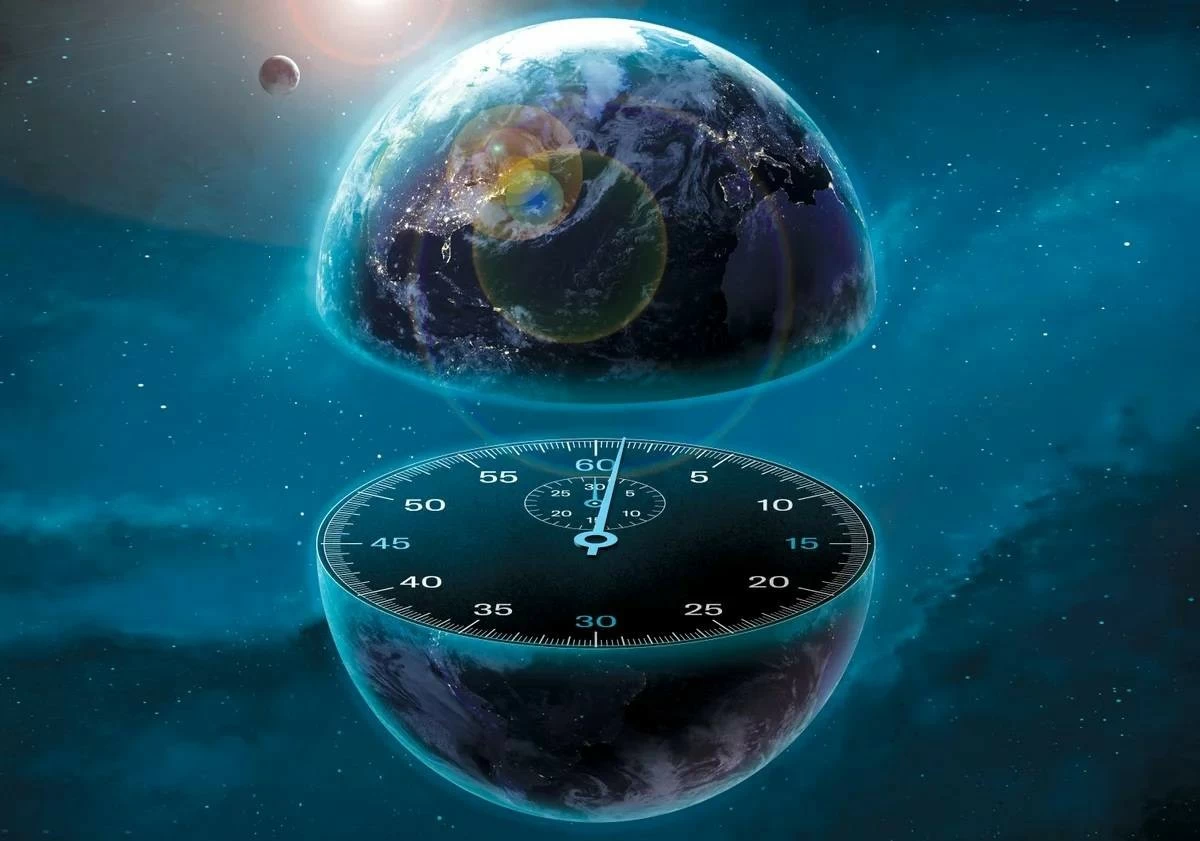
New scientific research reveals that Earth is spinning at a slower pace than usual, causing days to lengthen at a rate unprecedented in millions of years. While day length fluctuates naturally due to lunar gravity and geological shifts, a joint study by the University of Vienna and ETH Zurich confirms that human-induced climate change is now a primary driver, marking a shift unseen for at least 3.6 million years. The research explains that the melting of polar ice caps and rising sea levels are redistributing Earth's mass toward the equator. Systems such as GPS satellites, space navigation, and global financial networks depend on the absolute accuracy of the planet's rotational speed, making the monitoring of this phenomenon vital for future global infrastructure. While these millisecond changes are imperceptible in daily life, they represent a critical challenge for high-precision technologies. This physical shift acts similarly to an ice skater slowing their spin by extending their arms.