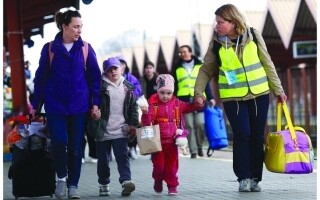
The European Union is facing difficulties in the issue of asylum reform, as countries do not trust each other on this matter. Several countries, including Germany, Belgium, and the Netherlands, accuse frontline countries like Spain, Greece, and Italy of allowing migrants to move to the EU instead of processing their asylum applications in line with Union law. The Commission is expected to unveil its proposal next week, after a delay of about a month, which will form the basis for negotiations between member states on the number of additional asylum seekers each country is willing to accept or the amount of financial support it is prepared to provide. Under the new system, at least 30,000 migrants will need to be resettled every year, with a decision on the destinations for these refugees to be made by the end of December. However, with EU governments under pressure to tighten migration policies, accepting more asylum seekers carries political risks. "It's a very difficult balance," said Camille Locus, head of the European Migration Policy Research Center. Which EU countries are facing the greatest pressure from migration? This question is causing a deep divide among member states, which are striving to reach an agreement by the end of the year on how to redistribute at least 30,000 asylum seekers across the Union. The 27-nation EU adopted a comprehensive reform of its migration policy in 2024, which will soon come into force. A key element of this reform is a new "solidarity" system for managing asylum seekers, aimed at reducing the burden on frontline countries such as Spain, Greece, and Italy. Overall, member states are divided into different categories, and Brussels can consider that some countries are under "migration pressure" based on criteria such as the number of illegal arrivals and sea rescue operations. Countries not under significant pressure will be required to either take a share of asylum seekers from countries under pressure or provide financial support of 20,000 euros per person. This is where the problem begins: how do we define who qualifies as being "under pressure"? "You can see in the political discourse that everyone feels they are under migration pressure," said a source inside the European Commission, tasked with classifying countries into categories. Frontline countries reject these accusations. "The Germans are on edge. It's not easy, because everyone is watching everyone else, wondering: is the other member state going to get a better deal?" There are tensions with the Italians and Greeks on this file." Member states are putting strong pressure to influence the methodology used. For example, in recent days, Sweden pointed to the 300,000 asylum applications it has received over the past decade as a high number for a "medium-sized country." Belgium confirms that "its migrant reception centers are full," while Germany has emphasized that it has taken in more than one million Ukrainian refugees since the war with Russia broke out in 2022. Meanwhile, France has highlighted the sea rescue operations it carries out for migrants trying to cross the English Channel to the UK.