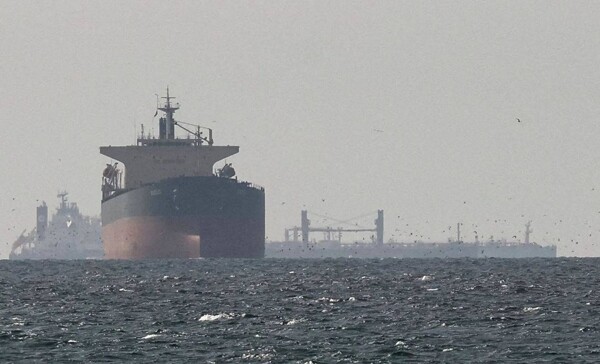
Europe, despite not being a direct military participant, is increasingly finding itself within the circle of danger as the conflict in the Middle East expands. Wars in the Middle East rarely remain confined to regional borders for long, as their effects quickly spread to other parts of the world. The core issue for Europe is its heavy reliance on energy imports. If shipping in the Strait of Hormuz, through which about a fifth of the world's oil passes, faces significant disruptions, Europe will feel the impact almost immediately, whether through rising fuel prices, renewed inflationary pressures, or slowed economic growth. The current war could carry heavy consequences for Europe, not just geopolitically, but also on economic, political, and social levels. The repercussions of the war will reach Europe, regardless of whether European nations succeed in agreeing on a unified stance.
The economic aspect is perhaps the most urgent. The Strait of Hormuz, through which roughly one-fifth of the world's oil passes, is already witnessing disruptions due to Iranian retaliatory measures and warnings about maritime navigation. This has led to a sharp rise in oil prices, with reports indicating that crude prices increased by over 12% in the first week of the conflict. This development comes at an inopportune time for Europe, which has not yet fully recovered from the economic shocks following the war in Ukraine. European economic systems remain highly sensitive to energy shocks. Every major conflict in the Middle East over the past quarter-century has ultimately led to waves of migration that reached Europe's borders, and a war with Iran could yield a similar outcome. The potential numbers could be enormous: Iran's population alone is around 90 million, and even if only a small percentage of these people seek refuge, it could place immense pressure on European migration systems that are still politically fragile since the 2015 refugee crisis. The issue of migration rarely remains a purely humanitarian matter for long, quickly transforming into a highly sensitive political issue. Far-right and populist parties in Europe have achieved significant electoral gains by focusing on border, identity, and migration control issues.
Ultimately, even if Europe fires no missiles at Iran, its economy will remain vulnerable to the direct fallout of this war. While Europe possesses significant economic and diplomatic influence, it simultaneously relies on American military power to guarantee its security within the framework of NATO. Over time, these repercussions have already begun to seep into various parts of the European continent. These consequences have a clear strategic character, especially given the divisions within Europe over this war. The European Union issued a cautious statement calling on all parties to "exercise maximum restraint," a stance that reflects the difficulty of reaching a unified position among the 27 member states, whose political orientations and strategic visions toward the conflict vary.
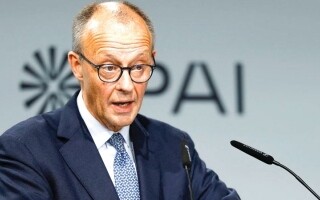
In this context, German Chancellor Friedrich Merz stands on one end of the European debate, clearly supporting the American-Israeli campaign against Iran and the broader Western efforts to reduce Iran's military capabilities. In contrast, Spanish Prime Minister Pedro Sanchez takes a markedly different position, having denied the U.S. permission to use its military bases in Spain for operations related to the war. He also condemned the strikes on Iran, deeming them a dangerous escalation that could push the region into chaos. Sanchez went further, accusing Washington of "playing Russian roulette with the fate of millions." This split between Merz and Sanchez embodies a deeper dilemma within Europe. Germany views the transatlantic alliance as the bedrock of European security and therefore tends to support the strategic priorities of the United States. The European Bank for Reconstruction and Development has already warned that this conflict could harm the confidence of global investors and weaken economic momentum. In such a scenario, European central banks may face a new dilemma. After years of high inflation, they have finally begun to cautiously ease monetary policy, but a prolonged rise in energy prices could complicate interest rate decisions and threaten the fragile economic recovery process.
Despite the severity of the economic repercussions, the politically most sensitive issue might be migration. The potential impacts extend from energy markets to migration routes, from the nature of relations within NATO to the rise of populist rhetoric. Many strategic experts in Berlin believe this stance is based on a clear logic: Iran's nuclear ambitions, along with its extensive network of allies and proxies in the region, pose a threat not just to Israel but to Western security as a whole. Merz's position aligns with Germany's post-World War II strategic doctrine, which is built on three main pillars: solidarity with Israel, commitment to the alliance with the United States, and the conviction that maintaining geopolitical stability may sometimes require the use of significant force.
Conversely, Spanish Prime Minister Pedro Sanchez stands in stark contrast. Madrid refused to allow the U.S. to use its military bases for war-related operations and condemned the strikes on Iran, calling them a dangerous escalation that could plunge the region into chaos. Sanchez went even further, accusing Washington of "playing Russian roulette with the fate of millions." This divergence between Merz and Sanchez reflects a deeper dilemma within Europe. On one hand, there is the Atlantic realism represented by Merz; on the other, there is the principled objection embodied by Sanchez. For a continent already facing a war on its eastern borders and suffering from internal political divisions, the conflict with Iran is not just a passing external crisis but a true test of Europe's resilience and cohesion. Spain, for its part, sees the crisis as an opportunity, and perhaps a responsibility, to bolster a more independent European voice in international affairs.
However, neither of these positions seems ideal for Europe. Too close an alignment with Washington could drag the continent into conflicts it has no desire to join. The coming weeks will reveal whether the continent can face this challenge with a united front, or if this war will only deepen existing divisions and increase the fragility of the European project. Europe, while not a direct participant in this conflict, will be forced to coexist with its repercussions.