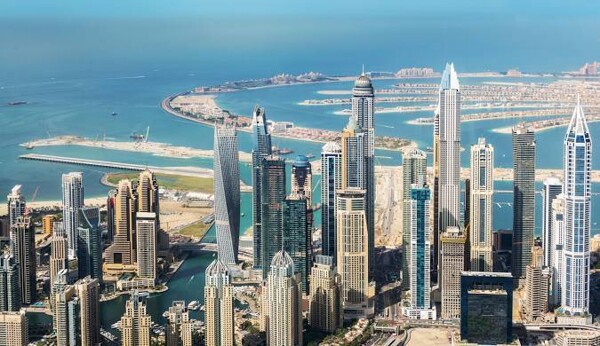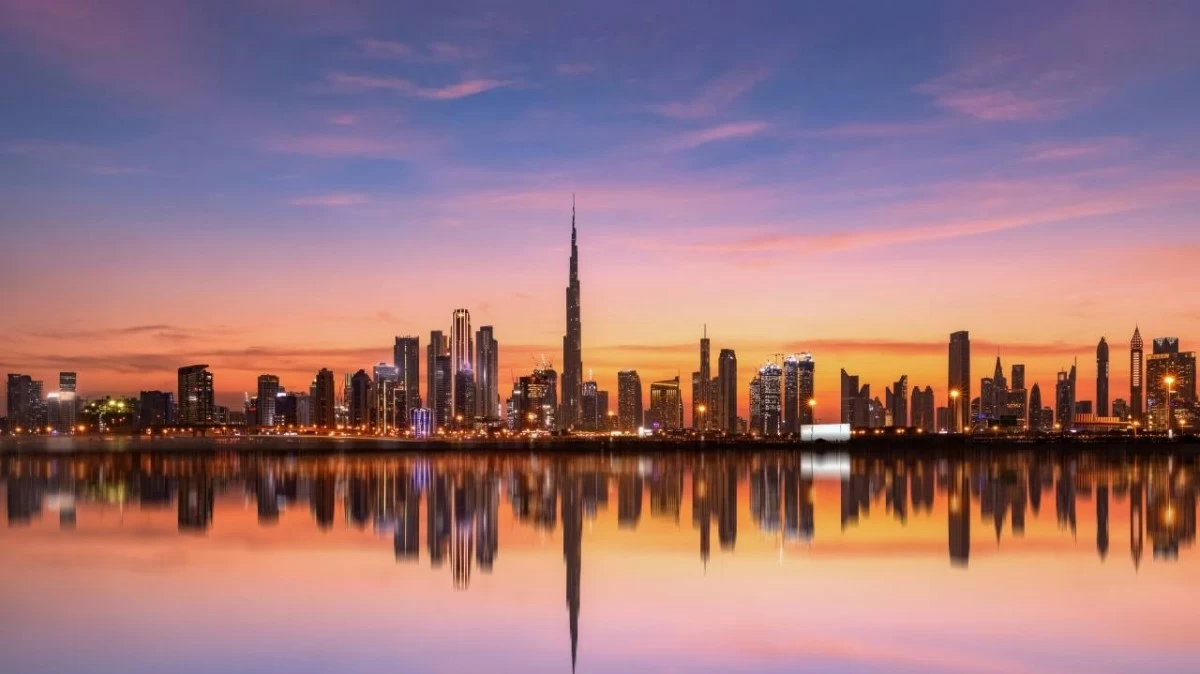
It rarely considers that the same leadership building the tallest tower in the world might also be digging the largest oil reserve under a mountain or buying a missile defence system a decade before the missiles arrive. So when someone asks how the UAE is managing this moment, the answer is simple: it was built for it. For decades, the world watched the UAE build towers, airports, islands, malls. An Emirates Council for Food Security coordinates across ministries, a federal law regulates the strategic stock, Dubai deployed an AI-powered Food Security Dashboard, Emirati companies secured farmland across multiple continents. In the desert, Dubai opened the world’s largest vertical farm. The digital walls rose just as methodically. What they did not see was the other construction site, the quiet one, the one that was never designed to impress, it was designed to protect. While the headlines tracked the skyline, the UAE was laying a different kind of foundation. Today the UAE ranks among the world’s most cyber-ready nations and is already implementing post-quantum cryptographic protections. Most analysts at the time questioned whether Hormuz would ever actually be closed, the UAE built it anyway. In 2011, the UAE became the first country outside the United States to purchase the THAAD missile defence system, by 2015 it was operational. In 2006, Abu Dhabi commissioned the design of a 380-kilometre crude oil pipeline from the Habshan fields to the port of Fujairah on the Gulf of Oman. Around it, the country built six layers of air defence, sourced from five countries and one developed at home, covering threats from high-altitude ballistic missiles to low-flying drones. Every system working today was designed years before anyone thought to ask whether it existed. This is what happens when a country’s leadership treats national resilience as infrastructure rather than emergency response. When schools shifted to remote learning within days of the first strikes, they followed the same playbook tested during Covid. The UAE Water Security Strategy 2036 set targets for emergency reserves long before anyone imagined they would be tested. In the first days of the current conflict, that shield intercepted more than 1,000 incoming missiles and drones with a success rate exceeding 90 percent. Underground, the water system was being fortified. Six inter-emirate water networks were constructed so that if one area faces pressure, supply flows from another. The food architecture was built to the same standard. It sees a skyline and assumes that is the project, it sees a crisis and assumes the country is caught off guard. In a country that faces between 90,000 and 200,000 breach attempts every day, those defences had been built long before the war made the numbers spike. None of this was reactive, none of it was built in February 2026. When AI-powered cyberattacks targeted the country’s digital infrastructure in late February, the Cybersecurity Council confirmed they were detected, contained and neutralised. A National Cybersecurity Strategy was launched in 2019, followed by the creation of a Cybersecurity Council in 2020 and a new strategy extending through 2031 to protect critical infrastructure, government systems and the digital economy. When supply chains held, they held because the architecture behind them had been built for exactly that. The world has a habit of underestimating quiet preparation. Beneath the mountains of Fujairah, ADNOC carved 42 million barrels of underground crude oil storage into rock, the world’s largest single-site underground oil reserve, invisible from the surface and designed to keep exports flowing when the obvious routes could not. Across the country, a 900-kilometre national railway took shape. Etihad Rail is building a national network connecting the Saudi border to Fujairah on the Indian Ocean, linking major ports and industrial zones by land, a logistics backbone that does not depend on a single sea lane. Above it all, a shield was being assembled. Dubai built the Mushrif reservoir and brought a new solar-powered desalination plant online at Hassyan producing 180 million gallons a day. Abu Dhabi invested more than $400 million in underground aquifer storage with a target of 90 days of strategic supply. Not for this war specifically, but for any version of the world that might require a country to feed its people, defend its skies, move its oil, protect its networks and keep its lights on without depending on a single point of failure. The question was never whether the storm would come, the question was whether the country would be ready when it did. Now you know the answer. When companies activated remote work, they ran the same protocols. The National Food Security Strategy 2051, launched in 2018, covers 18 food categories, each sourced from three to five alternative countries. It cost $4.2 billion and became operational in 2012. The pipeline bypasses the Strait of Hormuz entirely. Government services stayed online, essential systems remained operational. Impressive, they said, ambitious, sometimes extravagant.