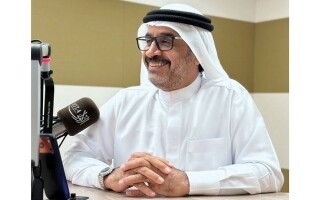
The Director General of Dubai's General Directorate of Residency and Foreign Affairs, Lieutenant General Mohammed Ahmed Al Marri, emphasized that this social cohesion was not a momentary phenomenon but the result of a long-term process focused on human development, fostering trust, and reinforcing the values upon which the UAE is built. He stated that what has been achieved is a natural reflection of a leadership vision that places people at the forefront and makes the quality of life and social stability a strategic goal. Concluding his speech, Lieutenant General Al Marri affirmed that the UAE is moving steadfastly towards the future, relying on a comprehensive operational system, a clear leadership vision, and a conscious society that serves as a key partner in the development journey, enhancing the country's status as a global model in sustaining achievements and readiness for various changes.
In turn, Abdullah Hamdan Bin Dalmook stated that the Emirati society is one of the most crucial elements of the state's strength. Under a leadership that has successfully built trust-based relationships with individuals, whether citizens or residents, through policies and programs that reflect a genuine concern for the quality of life and social stability. He pointed out that the uniqueness of the Emirati model lies in its ability to instill the concept of a shared sense of belonging, where the current phase has demonstrated the depth of this connection between people and nation amidst a leadership that is close to the people, monitoring their affairs and anticipating their needs, thereby strengthening social cohesion and stability. He added that the original Emirati values upon which the state was founded—tolerance, solidarity, and mutual respect—are not confined to its local framework but are reflected in everyone living on Emirati soil, forming a unique social model based on positive coexistence and a spirit of shared responsibility, where all have become partners in reinforcing these values and translating them into daily behavior that reflects the society's identity.
Bin Dalmook continued: "What we are witnessing today in terms of social cohesion and harmony among various segments of society is the natural outcome of a long-term approach to human development, enhancing the value system, and establishing an environment based on trust and respect. This human model represents one of the most prominent features of Emirati excellence." He noted that the continuity of this model relies on societal awareness, the complementary roles of institutions, and the leadership's commitment to improving the quality of life, ensuring that the UAE remains a leading model in building cohesive societies capable of facing challenges with a single spirit and a shared vision.
The "Dubai Passports" program concluded its fourth season with a finale that carried deep patriotic themes, reflecting the UAE's image as a global model in crisis management, sustaining achievements, and building a cohesive society based on trust, integration, and a sense of belonging.
In a special episode about a nation that turns challenges into new starting points, "Al Oula" radio concluded the fourth season of the "Dubai Passports" program at the Hamdan bin Mohammed Centre for Heritage Revival in Dubai.
The finale, titled "The UAE: A Steadfast Continuity and a Work Model that Inspires the World," featured Lieutenant General Mohammed Ahmed Al Marri, Director General of Dubai's General Directorate of Residency and Foreign Affairs, and Abdullah Hamdan Bin Dalmook, CEO of the Hamdan bin Mohammed Centre for Heritage Revival. The national dialogue highlighted the features of the Emirati model in managing the present and envisioning the future.
The finale aimed to provide a deep analysis of the elements of strength that underpin the Emirati landscape through an operational system based on institutional integration, sustainable readiness, and rapid response within a leadership vision that has solidified a collaborative work approach and transformed challenges into opportunities for achievement and progress.
Lieutenant General Al Marri confirmed that what distinguishes the UAE is its ability to turn challenges into new starting points, thanks to a flexible operational system based on inter-agency integration, clear role definitions, and swift decision-making. He indicated that the constant readiness of various sectors is one of the most critical elements for sustaining success, reflecting an advanced institutional approach based on proactivity and efficiency. He explained that Dubai International Airport serves as a living example of this system, where the efforts of all working entities are integrated within the airport community, ensuring seamless operations and continuous high-efficiency workflow. He noted that this integration reflects a high level of institutional coordination that flexibly and professionally meets the demands of the era.
Loyalty and Belonging
Lieutenant General Al Marri added that what has been evident in the current period is the high level of loyalty and sense of belonging displayed by everyone, from citizens to residents. The image of a cohesive Emirati society was showcased at its finest through commitment, a sense of responsibility, and positive engagement with various directives and measures. This reflects the depth of the bond connecting individuals to this nation and their trust in its leadership and institutions.