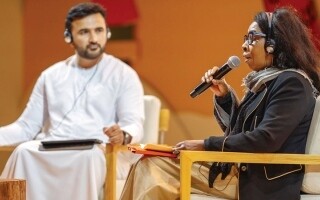
Participants in the third day of the Sharjah African Literature Festival considered that writing is not always practiced as a purely creative act, but can begin as an urgent need to protect memory from being lost and as a means of confronting the fear of losing details under the weight of shocks. The sessions discussed writing as a form of documentation that helps writers stay psychologically coherent, transforming personal and collective pain into a human testimony that can be narrated and shared, pointing to the vital role played by translation in giving African literature a new life and reaching readers in different languages and continents. The sessions highlighted how local narratives move from their original contexts to a broader global space without losing their voice or meaning, which enhances the presence of African literature in the international cultural scene. In a special session that attracted significant attention, the festival hosted Rwandan writer Scholastique Mukasonga, author of the novel 'Our Lady of the Nile,' who presented a literary testimony about her relationship with writing as an act of memory protection rather than a traditional literary project. She explained that she began writing out of fear of losing details under the weight of the great trauma that occurred in Rwanda, and that documentation was for her a way to stay psychologically coherent in the face of the genocide experience before it later transformed into a complete life path in autobiography, novel, and short story. Mukasonga added that returning to memory in Rwanda was a difficult experience because it meant recalling scenes of loss, violence, and loss in all their details, but she saw in writing a way to confront this pain by telling the stories of victims as they lived them—as humans, not numbers—and presenting them again as individuals with names, lives, and stories. She confirmed that the success of her works, their spread, and their translation into several languages did not change the essence of her relationship with writing, which for her has become a personal commitment and a moral responsibility that cannot be renounced. The festival also witnessed a dialogue session titled 'The Book without Borders: African Stories in Translation,' in which Kola Tubosun and Ayalneh Mulatu Abegaz participated. In a third session titled 'Publishing in Africa and the United Arab Emirates,' the festival discussed the reality of the transformations taking place in the publishing sector, with the participation of Goretti Kyomuhendo and Ali Shaali.