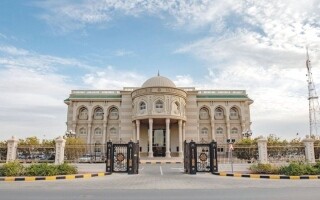
In Sharjah's public libraries, accessing books is no longer tied to working hours or building entry, as the 'Smart Depot' service allows members to self-borrow books 24/7. The process begins by reserving desired titles through the library's electronic catalog, then collecting them from the smart depot located at the back entrance of Sharjah Central Library using an Emirati ID or membership card. This expands access to knowledge beyond traditional time frames and reflects the library's transformation into a flexible, user-centric service.
This advanced digital environment is fundamentally based on organizing knowledge before making it available, using a cataloging system based on Anglo-American rules and the Dewey Decimal Classification. In a library with roots dating back to 1925, the cataloging system has, through its various stages, been the backbone connecting books and readers. As the library gradually transformed into a network of six branches covering the emirate's cities, it now holds over 791,328 diverse intellectual resources and provides access to more than 15 million electronic materials.
The opening of the new Sharjah Public Library building in 2011 marked a key milestone in service modernization and the systematic shift to digital systems. Automated systems for managing catalogs and loans in both Arabic and English were implemented. With this digital transformation, the library's online presence expanded, and by 2019, thousands of e-books and audiobooks were available on its digital platform. The year 2020 highlighted the practical impact of this path, with access to millions of multilingual electronic resources, leading to a 70% increase in membership and attracting users from dozens of nationalities.
This transformation is also evident in the educational and professional aspects of the libraries. In 2021, the 'Smart Library of Knowledge' was launched as a platform for specialized virtual courses. In 2025, Sharjah Libraries announced the launch of an enhanced version featuring short learning paths, digital assessments, and instant certificates, with a smartphone-compatible design.
In the same professional context, Sharjah Libraries have deepened the discussion on the future of office work by choosing 'Artificial Intelligence in Libraries: Innovation and Impact' as the theme for its 2025–2026 cycle, linked to the Library Literature Prize. This indicates a shift in focus from digitizing content to developing institutional practices using advanced technologies.
Extending this path, libraries worldwide are moving towards a phase that transcends MARC standards and traditional search interfaces, towards models based on 'linked data' that make a bibliographic record part of a broader semantic network, enhancing discovery and deepening research.
Within this framework, Sharjah Libraries' centenary experience can be seen as a gradual journey that began with cataloging aimed at enabling users to locate and easily access a book, then moved to large-scale digital discovery. The next phase is shaping up to develop a more precise and intelligent search experience that combines global standards with the local identity that distinguishes its collections.