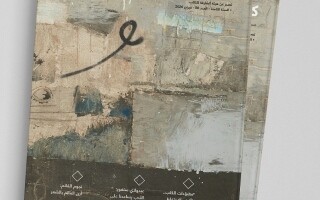
The February issue of the magazine 'Kitab' explores the stages of manuscript writing and how to handle them, featuring an opinion poll of Arab writers, authors, and publishers who noted numerous modifications made to the initial version before its publication in a book. Published monthly by the Sharjah Book Authority, the magazine featured dialogues with Senegalese writer Abdoulai Racine Senghor, Emirati poet and filmmaker Najma Al-Ghanam, Egyptian publisher Sherif Bakr, and Algerian novelist Ameen Zaoui. In his editorial titled 'Two Literary Festivals at the Start of the Year,' Ahmed bin Rakad Al-Amari, CEO of the Sharjah Book Authority and Editor-in-Chief of the magazine, wrote that the Sharjah International Book Festival 'focuses on highlighting Emirati literary creativity, caring for new voices, and enhancing the publishing industry.' Regarding the Sharjah African Literature Festival, which strengthens ties between the Arab world and the African continent, he stated that the festival comes 'as a manifestation of the wise vision of the intellectual, author, and historian, the wise ruler, His Highness Sheikh Dr. Sultan bin Muhammad Al Qasimi, Member of the Supreme Council and Ruler of Sharjah, and his keenness to build a network of bridges between Arab culture and the cultures of other peoples, foremost among them the African peoples.' He added, 'The festival was crowned with great success in its new edition, becoming a global platform for Africa's literary voice, thanks to the support of Sheikha Bodour bint Sultan Al Qasimi, Chairperson of the Sharjah Book Authority, and her directions to activate the relationship with Africa through numerous initiatives in the fields of publishing, books, and joint cooperation.' Ahmed Al-Amari confirmed that the Sharjah African Literature Festival has become 'a space for the voice and creators of the continent, a space for cultural acquaintance and cooperation between Arab and African writers, authors, thinkers, and publishers in joint projects, including translation, which is a linguistic and vital bridge for communication between peoples.' The 88th issue of 'Kitab' magazine included articles and studies on Palestinian thinker Edward Said as a poet, Bulgarian writer Elisaveta Bagryana, Slovenian poet Srecko Kosovel, Venezuelan poet and musician Belen Ojeda, and Spanish writer Carlos Ruiz Zafon. In the 'Reviews' section, the magazine published critical readings of books by authors from Lebanon, Palestine, Jordan, Iraq, Singapore, Tunisia, and Yemen. In his 'Raqam' corner, Ali Al-Amari, Editor-in-Chief of 'Kitab,' wrote an article titled 'Geographical Appropriation,' in which he said: 'We usually read about the concept of economic appropriation, when a company appropriates another by buying it completely or the largest share of it, to achieve financial and administrative control. However, now, it seems this concept is migrating to geographical appropriation, where a powerful country imposes its hegemony over another country geographically, economically, and culturally.'