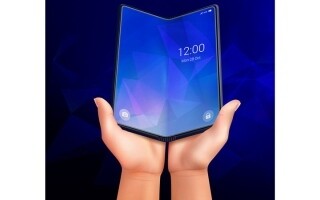
In recent years, the smartphone industry has undergone a radical transformation in screen development. Major tech companies have focused on innovation to enhance their competitiveness and offer unprecedented benefits, catering to diverse user needs. These innovations have contributed to an advanced user experience that combines an attractive design with practical performance, alongside personal data protection and improved device durability. One of the most significant recent developments is the emergence of smartphone screens equipped with privacy protection technologies, also known as anti-spy screens. This technology allows the user to view the phone's content only for themselves, while preventing others nearby from seeing sensitive data like passwords or personal information. As Lai Ren, CEO of Oppo in the Middle East and North Africa, stated, 'Competition in the smartphone sector today is focused on human-centric design, achieving a balance between innovation and price.' He emphasized that users now seek a comprehensive experience that combines advanced performance with high quality. This technology also enables the phone to be transformed into a large tablet-like screen or used as a dual screen. Companies like Huawei have launched the Huawei Mate XT, while Samsung has introduced the Galaxy Z Fold, allowing users to benefit from larger and more flexible screens in their daily lives. Innovations in smartphone screens have also included improving screen durability, making them resistant to shocks and scratches. This was achieved through the development of glass used in phones, such as Gorilla Glass, which can withstand drops from up to two meters onto solid surfaces. Honor also announced screens that are scratch, abrasion, and reflection-resistant, capable of withstanding significant weight while maintaining display quality. Additionally, companies have focused on protecting users' health by developing screens that reduce glare and visual fatigue while maintaining high levels of brightness and clarity. Samsung has adopted this technology in its latest release, the Galaxy S26 Ultra, setting new standards for user protection. The markets have also seen a race to develop foldable and flexible screens that can be used in multiple ways without showing crease marks, which was a challenge in early versions. Flexible plastic screens that do not break but bend under pressure have also been developed. In the near future, it is expected that stretchable screens using flexible OLED materials and screens based on smart polymers that can self-repair after scratches will become available. Borderless screens with hidden cameras underneath the screen are also expected, as revealed by various tech companies. As technology expert and Head of Mobile at Samsung Gulf Electronics, Fadi Abu Shamat, noted, 'The development of screens with new technologies that meet consumer needs and enable new capabilities has been evident in innovations that provide privacy specifications for users' phones, allowing the prevention of viewing phone content or spying by bystanders.' He added that 'screens are currently more advanced and innovative compared to previous periods; even foldable smartphones and their latest, the tri-fold, are capable of folding to provide larger and more precise screens, along with additional screen protection benefits.'