Amid rising geopolitical tensions in the Gulf and the Middle East, the United Arab Emirates (UAE) stand out as one of the world's most important pillars for maintaining stability in oil and energy markets. The UAE serve as one of the main guarantees for the stability of global energy supplies, acting as a reliable partner that the international community can count on to address energy security challenges. Crises and conflicts in the region often directly impact global energy supply flows and prices, making the UAE's role even more critical at this sensitive stage.
Oil markets experience frequent fluctuations whenever tensions in the region escalate, given that the Arabian Gulf represents one of the world's most important energy corridors. Estimates indicate that nearly one-fifth of globally traded oil passes through the Strait of Hormuz, making any disruption in its vicinity a direct factor affecting global energy trade.
In this context, the UAE emerge as a nation possessing advanced infrastructure and a high capacity to manage its oil production efficiently. Additionally, the UAE possess alternative export routes that reduce risks associated with sensitive maritime passages. The country has invested in recent years in developing strategic pipelines and ports to ensure the continuous flow of supplies to global markets, even amid complex geopolitical conditions.
The Abu Dhabi National Oil Company (ADNOC) also plays a pivotal role in this framework, continuing to implement expansion plans aimed at increasing production capacity and enhancing supply chain flexibility. The company aims to reach a production capacity of nearly five million barrels per day in the coming years, which provides global markets with a reliable source of energy during crises. At the same time, the UAE maintain an active role within the Organization of the Petroleum Exporting Countries (OPEC), participating in coordinating production policies with other producing nations, which helps achieve balance between supply and demand in the global market and limits sharp fluctuations that could result from political or military disruptions.
Energy market analysts believe that regional tensions often drive oil prices higher due to fears of supply disruptions or the closure of vital maritime routes. In such situations, countries with political stability and high production capabilities, like the UAE, become a key balancing element in the global market.
The UAE's role is not limited to ensuring supply stability but extends to adopting a long-term vision for the energy sector that combines responsible oil and gas production with investments in clean energy and low-emission technologies. This approach enhances the country's ability to adapt to global transformations in the energy sector and secures it a leading position in future energy leadership.
Amid the continuation of geopolitical tensions in the region, the importance of the UAE's role in the global oil market has become clearer than ever. Thanks to its balanced policies and strategic investments, the UAE remain one of the most important guarantees for the stability of global energy supplies and a reliable partner that the international community can rely on to face energy security challenges.
A Balanced Strategy
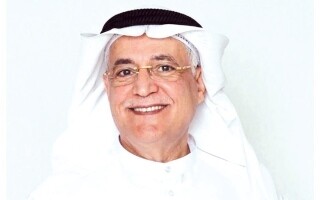
Dr. Ali Al-Amiri, Chairman of the Board of Directors of 'Shamook Group for Oil Services' and an expert in energy and economics, told 'Al-Ittihad': 'The UAE are no longer just a traditional energy supplier; they have become today the 'chief engineer' of the global roadmap that combines energy security and climate leadership. Through a balanced strategy, the country has succeeded in cementing its position as an international capital for renewable energy and climate diplomacy, while maintaining its role as a safety valve for the stability of the global economy.'
He added: 'At a time when the world is experiencing sharp geopolitical turbulence, the UAE emerge as a reliable partner through its pivotal role in the OPEC+ alliance. As 2026 approaches, ADNOC continues to implement its strategic plan to raise production capacity to five million barrels per day in the coming years to support global demand growth.'
Al-Amiri noted that the UAE's role is not confined to oil alone, as the gas sector witnessed a radical transformation in 2025 through mega-projects such as 'Ru'ays for Liquefied Natural Gas,' which places the country on the path to becoming a net gas exporter, providing a safe and sustainable alternative for European and Asian markets.
He continued: 'On the sustainability front, Abu Dhabi Future Energy Company (Masdar) continues to expand its green geopolitical influence in more than 40 countries. By January 2026, the company had achieved an unprecedented feat by bringing its project portfolio to 65 gigawatts, and it is moving confidently towards its ambitious target of 100 gigawatts by 2030.'
He pointed out that in a historic shift, the 'Barakah' Nuclear Energy Plant has become a global model for transitioning to carbon-free base-load energy. When operating at full capacity (5.6 gigawatts), the plant today covers 25% of the country's electricity needs and prevents the emission of 22.4 million tons of carbon annually, equivalent to removing 4.6 million cars from the roads.
Clean Energy Investments nThe volume of UAE investments, which has exceeded $51.5 billion in clean energy projects locally and internationally, reflects the seriousness of the shift towards a 'green economy.' These efforts have been translated domestically through a record increase in solar panel imports (exceeding 9 gigawatts in 2025), supported by leading projects such as the 'Al-Zafra' and 'Al-Khazna' power plants.