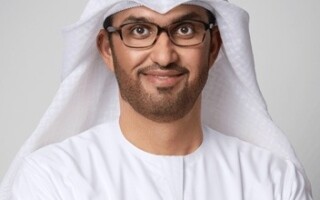
Dr. Sultan Ahmed Al Jaber, Minister of Industry and Advanced Technology of the UAE, Managing Director and Group CEO of ADNOC and its group of companies, Chairman of the Board of Masdar, and Executive Chairman of the Board of XRG, stated today that Iran's closure of the Strait of Hormuz constitutes economic terrorism affecting all countries of the world, with repercussions far beyond energy markets. In his speech during the opening of the 'SIRA Energy Week' being held in Houston, Texas, USA, Al Jaber said that when the security of the Strait of Hormuz is threatened, costs increase daily for factories, farms, and families worldwide. He affirmed that energy security is not just a slogan but constitutes the difference between light and darkness, and between the continued operation or shutdown of life-sustaining facilities, pointing out that recent weeks have emphasized the need to keep the world's lifelines open. Al Jaber said: "These events tested our defensive capabilities, confirmed our strength, resilience, and ability to withstand, and showed our true metal." He added: "At ADNOC, we were subjected to attacks that no civil institution should face, especially given our focus on providing energy resources to the world. We are implementing exceptional measures to ensure the safety of our workforce and, as much as possible, strive to provide energy resources to all our customers. We will continue to defend our beloved nation, our values, and our principles. This experience has confirmed the validity and credibility of our progress model, which is based on pragmatism rather than ideologies, and moves forward with a steady pace and a practical methodology, focusing heavily on results." Al Jaber explained that the UAE's and ADNOC's resilience in such circumstances came through investing in infrastructure, preparing for crises years in advance, long-term planning, and building strategic partnerships. He said: "For us in the UAE, partnership is not just a practice we adopt, but it is part of our identity. Our commitments are firm, and credibility is the essence of our approach. When necessary, we step up and take the initiative. That is why our relationships with all our partners, including the United States, endure. We have invested through ADNOC, XRG, and Masdar more than $85 billion in energy assets in the United States to support power generation and the manufacturing of advanced chemicals, where the United States offers a unique mix of resource abundance and investment stability. We continue to explore numerous opportunities across the energy sector value chain and are working to enhance our investments in infrastructure, from storage facilities to liquefied natural gas plants and regasification stations." Looking to the future, Al Jaber said that "the current crisis has revealed a great divergence in vision between those who seek to enhance stability and prosperity and those who seek to undermine stability." He explained that the UAE made its choice long ago by establishing ADNOC to be one of the world's most reliable energy companies, not because disruptions do not reach us, but because we withstand and are committed to continuing to work steadfastly when they do. Therefore, we have diversified energy sources and production methods, strengthened the routes that link supplies to markets, focused on integrating a diverse mix of energy sources on a large scale, and leveraged technology and artificial intelligence in all our operations to multiply efficiency, mapping out the contours of the next phase in the energy sector. We have built a global network of partnerships with partners who are firmly convinced that energy security is a shared responsibility. Al Jaber extended an open invitation to energy sector leaders to attend the Abu Dhabi International Petroleum Exhibition and Conference (ADIPEC) next November, saying: "Developments in recent weeks have shown that there are those who work to enhance stability and there are those who are content to follow the disruptions. I have affirmed that stability does not achieve itself but must be built with persistence and collective effort." He added: "If you believe that the approach of cooperation and enhancing stability must overcome the mindset of conflict, your place is with us. Therefore, I invite you to join us at ADIPEC next November to be more than just a conference, but a gathering to affirm the need for the resilience of the global energy system." It is worth noting that 'SIRA Energy Week' events are being held from March 23 to 27, while ADIPEC events will be held from November 2 to 5, 2026, at the ADNOC Center in Abu Dhabi. Al Jaber said: "The Strait of Hormuz is one of those arteries, its width is 21 miles, and through it passes 20 million barrels per day, which is one-fifth of the world's daily oil and gas needs, more than a third of the world's fertilizer needs, up to a quarter of the world's petrochemical production, in addition to large quantities of metals needed by industries. That is, a large part of the basic materials needed by the global economy passes through one vital artery. Yet, Iran believes that closing it is an acceptable strategy." He added: "When the security of the Strait of Hormuz is threatened, this pressure is immediately transmitted worldwide. Oil prices rose by 50% in three weeks, which raises the cost of living for the most vulnerable, slows economic growth everywhere, and increases costs daily for factories, farms, and families around the world. Therefore, exposing the Strait of Hormuz to danger is not an aggression against a specific country, but economic terrorism against all countries of the world. No country should be allowed to take the Strait of Hormuz hostage, not now, and not ever. And while we appreciate all efforts aimed at achieving stability in markets and reducing prices, this is not a supply problem, but a security problem with one sustainable solution, which is to keep the Strait open, because freedom of navigation is a fundamental principle of international law and the United Nations Convention on the Law of the Sea. Iran's actions affect peoples all over the world, especially the most vulnerable." Al Jaber stressed that the UAE did not want this conflict to happen and took all possible steps to prevent it, but it was fully prepared to face it when forced to.