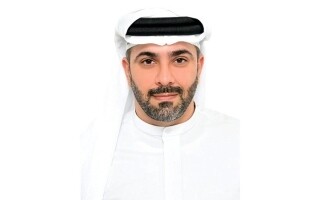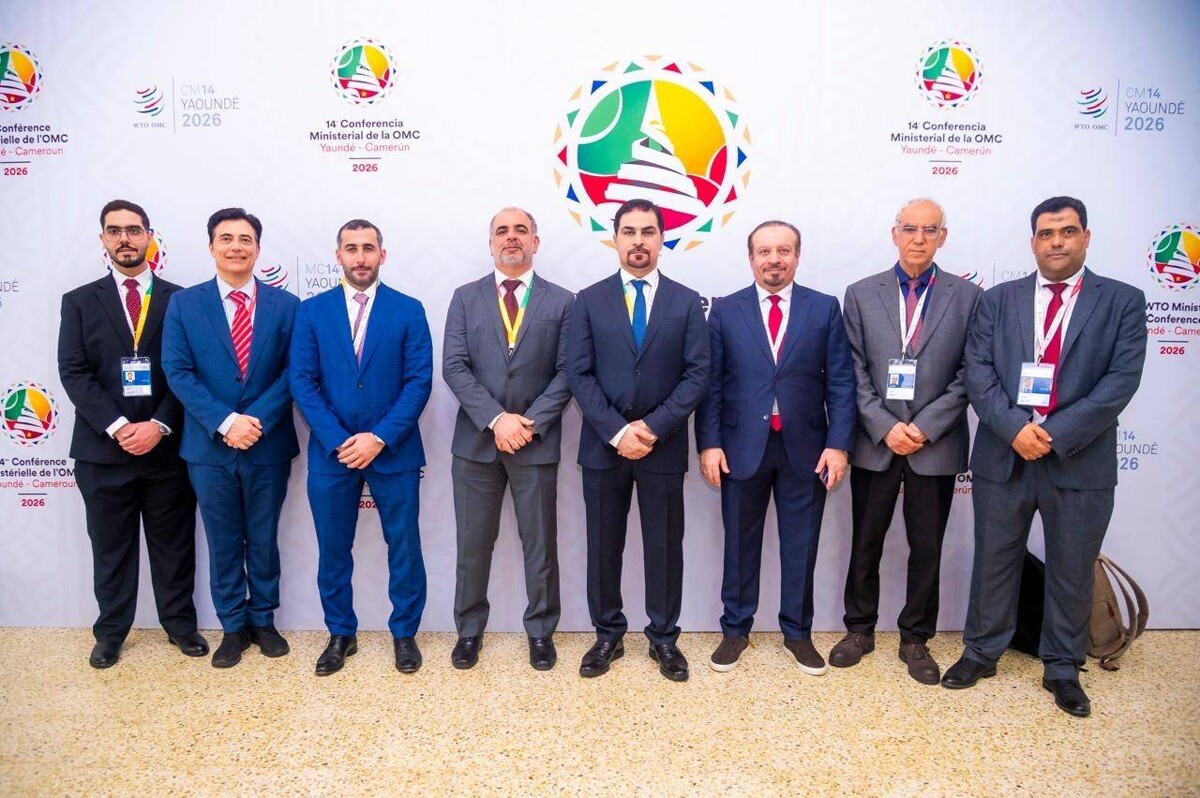
The United Arab Emirates (UAE) has reaffirmed its commitment to continuing its contribution to international efforts to adopt a rules-based multilateral trading system, which is a fundamental driver of sustainable economic growth worldwide, especially amid the unprecedented challenges currently facing the global trading system due to geopolitical tensions and the rise of protectionism, with all their negative impacts on global supply chains and the flow of goods and services across borders. This was stated during the country's delegation participation in the 14th Ministerial Conference of the World Trade Organization (MC14), hosted by Cameroon from March 26 to 29. The UAE delegation was headed by Fahad Al-Kaabi, Under-Secretary of the Ministry of Foreign Trade, and included a number of officials from the ministry, representatives from the Ministry of Foreign Affairs and International Cooperation, the Central Bank of the UAE, and the country's mission to the WTO in Geneva. The UAE's active participation in this key international event reflects the country's growing stature as a major player in shaping the future of global trade, especially after successfully hosting the 13th Ministerial Conference in the UAE capital, Abu Dhabi, in early 2024, whose outcomes helped to solidify the UAE's positive role as the host country in shaping the future of international trade towards greater openness and shared prosperity. Fahad Al-Kaabi said: "The UAE's participation in the 14th Ministerial Conference of the WTO is the culmination of an ambitious strategy the country is pursuing to enhance its role as a key player in shaping the future of global trade and as a global trading hub, especially after successfully turning our open-world economic vision into a tangible reality. The country's non-oil foreign trade reached record figures in 2025, exceeding 3.8 trillion dirhams (equivalent to 1.03 trillion dollars), achieving a growth of 27% compared to 2024, supported by a surge in UAE's goods exports, which enhances its position as a global trading center thanks to the comprehensive partnership agreements the country continues to sign with strategic partners in key growth regions around the world." He added: "This record growth in non-oil foreign trade is the fruit of our open-world trade strategy that the UAE is continuously implementing, alongside adopting rules-based free trade as a catalyst for growth, which in turn has reflected on the success of the economic diversification policies pursued by the UAE, and has also enhanced the country's ability to overcome the geopolitical and economic challenges the world is witnessing, remaining a model in trade openness and integration into the global economy." From this standpoint, the UAE renewed its call at the conference to rally international support to maintain the smooth flow of trade and enhance the resilience of the global economy in the face of shocks. These priorities are expected to be a central axis of the 14th Ministerial Conference's agenda, where the UAE seeks to translate this partnership into tangible results that enhance the efficiency and effectiveness of the multilateral trading system. During its participation in the 14th Ministerial Conference of the WTO, the UAE delegation stressed that restrictive trade measures at the global level threaten to fragment the global economy, weaken economic growth, and increase inflationary pressures and unemployment rates. The delegation also highlighted the UAE's development model, reaffirming the country's commitment to the principles of economic multipolarity and strengthening international partnerships at a critical time for global trade. On a bilateral level, the UAE's participation in this important international forum was distinguished by its ability to combine multilateral work with strengthening bilateral relations. The UAE continued to explore opportunities to expand its network of trading partners, leveraging its unique geographical location and advanced infrastructure, as well as exploring new prospects for trade cooperation with African countries, especially given that the conference was held on the African continent, which is witnessing increasing economic growth. On the sidelines of the conference, the UAE delegation held a series of bilateral meetings with representatives from Austria, the Bahamas, New Zealand, Peru, Guatemala, and others. The Ministerial Conference is the highest decision-making body in the WTO, bringing together trade ministers and senior officials from 164 member countries. As the risks associated with trade wars and tariffs imposed by some major countries increase, and barriers to the global flow of goods grow, the UAE emerges as a moderate voice calling for the preservation of an open, rules-based trading system. This call was not merely theoretical but was translated by the country into concrete, practical steps. The UAE's participation in the 14th Ministerial Conference takes on a new dimension amid the rapid developments in the global trading system. Alongside the UAE, this international group includes: Brunei, Chile, Costa Rica, Iceland, Liechtenstein, Morocco, New Zealand, Norway, Panama, Rwanda, Singapore, Switzerland, and Uruguay. The members of this international partnership cooperate on a wide range of vital trade issues, including enhancing supply chains, removing non-tariff barriers to trade, supporting foreign direct investment, and adopting and integrating emerging technologies. This year's conference holds exceptional importance as it is the second event hosted by an African country after the 10th conference in Nairobi, Kenya, in 2015, highlighting the growing interest in the role of the African continent in the multilateral trading system. Recently, the UAE joined the 'Future Investment and Trade Partnership' (FIT) initiative, which includes 14 countries that believe the principles of free trade are a cornerstone of stability and prosperity.