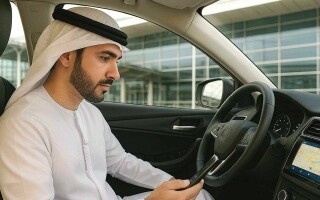
With the arrival of the winter holiday season and as many families travel, technical reports and cybersecurity experts are warning of hidden threats to travelers' privacy that many may not be aware of. The most prominent of these are reliance on rental cars and public phone chargers, as these methods can pose cybersecurity threats and compromise data privacy.
Several cybersecurity reports have shown that travelers, when renting cars, often sync their phones with them without any safeguards to make calls, listen to music, and use navigation apps. They note that users frequently grant the car full access to their phone data to maximize convenience, including reading messages and making calls while driving, without realizing this permission can open the door to sensitive information.
The report explains that allowing a car to access phone data enables it to view call logs, recent text messages, email, and contact lists, as well as personal calendars and location data, which may include home, work, and frequently visited places. It highlights that this information is highly valuable if hackers gain access to it through the car's systems.
Reports also add that hackers can exploit this data to compromise users' social media accounts, stealing passwords and usernames. Hacking can also occur via Bluetooth, where attackers try to pair their devices with the car without the user's knowledge or send malicious files and links to the phone, granting them access to additional data.
The report also highlights that using public phone chargers is one of the biggest risks overlooked by some travelers. Some of these chargers come with pre-installed malware that allows hackers to steal data and passwords as soon as a phone is connected.
Technology and cybersecurity experts have emphasized the need to follow precautionary measures to avoid hacking or cyberattacks, whether through public chargers or rental cars, especially given how easily travelers can fall victim to these threats unknowingly.
Cybersecurity expert and Chief Security Consultant at Kaspersky, Emad Al-Hafar, stated that many travelers may fall into hidden and unexpected traps that lead to phone hacks, the most prominent being public chargers, which may be loaded with malware that accesses phone data or installs malicious apps without the device owner's knowledge.
Al-Hafar stressed the importance of avoiding these chargers and instead relying on personal chargers or trusted power sources, as well as installing antivirus software and encrypting sensitive data before traveling.
He also noted that full connectivity with rental cars can expose user data to unwanted interference, as stored information can be used to lure the user into future cyber threats. He urged deleting data from the car after use, resetting to factory settings when possible, and limiting the car's access to phone data.
Meanwhile, IT expert Dr. Mohammad Al-Fiqi emphasized the importance of being mindful of unintentional mistakes travelers make, such as using untrusted chargers that could compromise their phones.
He advised using effective protection programs, setting strong passwords, and relying on biometric entry systems like fingerprint or face recognition. He also stressed refusing any data transfer requests during charging and avoiding untrusted public chargers altogether.
Technology expert Jessi Kimler pointed out the importance of avoiding unsafe public chargers, stressing the need to delete any stored data in the rental car, remove the phone from paired devices, and restrict the information the car is allowed to access, preventing it from storing or reading data without secure re-syncing with the phone.
Experts: Public chargers may come loaded with malware that accesses phone data or installs malicious apps without the device owner's knowledge.