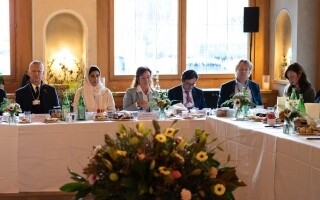
Global leaders from government, business, charity, and civil society sectors emphasized the importance of leveraging artificial intelligence to reduce disparities and development gaps between nations during a high-level dialogue session hosted by Badr Jafar, Special Envoy to the Minister of Foreign Affairs for Business and Philanthropy, in collaboration with the Office of the Prime Minister's Chairmanship, titled "Best Practices for Implementing Intelligent Solutions to Achieve Practical and Equitable Outcomes Across Sectors" as part of the World Economic Forum's annual meeting in Davos.
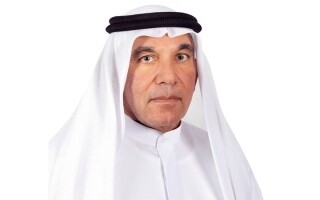
The session was attended by Badr Jafar, Huda Al Hashimi, Assistant Minister for Cabinet Affairs for Strategic Affairs, and over 50 senior executives from the government sector, global technology companies, charitable institutions, multilateral organizations, and social innovation organizations.
Attendees discussed the importance of enhancing coordination and alignment between government policies, private sector innovations, and strategic philanthropy to rapidly and effectively translate AI innovations into tangible social outcomes, especially in emerging markets lacking services.
Participants enriched the dialogue with diverse perspectives and experiences, stressing that addressing the opportunities and challenges associated with artificial intelligence is a collective task that no single entity can face alone.
"Many AI tools designed to support climate adaptation have had broad societal impacts," said Her Highness Sheikha Shamma bint Sultan Al Nahyan, CEO of both Frontier25 and The Climate Tribe. "While AI holds immense potential to support our planet, we have a clear ethical responsibility to use it with awareness and transparency, serving humanity and the environment in tandem. Although the most vulnerable groups—including women, youth, and low-income populations—bear the heaviest burden of extreme weather events and rising temperatures, the effective use of AI allows us to leverage insights into energy production and consumption, develop early warning systems to mitigate risks, and build data-driven strategies to enhance resilience, thereby better addressing the impacts of climate change on these groups."
Her Highness added: "The UAE leads in investing in the most innovative technological solutions." Attendees explored the impact of incentives on innovation adoption, regarding location and methodology, noting that despite massive global capital flowing into AI, only a very small fraction is allocated to addressing pressing social and developmental challenges.
Participants called for more coordinated steps to ensure achieving positive social outcomes through the concerted efforts of governments, businesses, and philanthropy, following an organized methodology that embraces clear governance frameworks from public institutions, philanthropic capital supporting shared infrastructure, and private sector efforts to develop, scale, and ensure the sustainability of solutions.
The session also touched upon the UAE's pioneering model that embodies this organized, collaborative methodology, built on early adoption, accelerated experimentation with correction as needed, and then sustainable investment in skills, governance, and trust. They highlighted the UAE's leading position in global AI technology adoption rates according to a Microsoft report, recording double the levels of trust in AI in the United States and most European countries.
"This is what we've witnessed in the UAE, which has adopted a clear approach based on trust and governance, combining early investments in digital infrastructure, skills, and application through the private sector, resulting in entrepreneurial ideas moving from the experimentation phase to the implementation stage," he added.
"When governments, business, and philanthropy align on this principle and unite on this methodology, strategic philanthropy becomes a driver for action tracks by removing early-stage risks and investing in infrastructure that supports effective methodologies and solutions and ensures rapid and widespread adoption."
In turn, Huda Al Hashimi, Assistant Minister for Cabinet Affairs for Strategic Affairs, affirmed the UAE government's commitment to enhancing international multilateral cooperation in developing AI-powered solutions and governing the sector, as well as promoting responsible innovation across all areas, which positively reflects on development efforts, supports the growth of the international philanthropy sector, and contributes to empowering communities worldwide to keep pace with the future and leverage its solutions to achieve prosperity and sustainable growth.
Huda Al Hashimi stated that innovation driven by social impact is the primary force behind supporting development efforts and the responsible adoption of AI solutions, and the most critical factor in shaping the trajectory of this fast-evolving sector to amplify its positive effects and contribute to tackling the future challenges most closely tied to community life.
Bridging Development Gaps
Session participants stressed that rapid infrastructure development must not widen development gaps but should contribute to narrowing them, especially since programming, data, and skill capabilities remain concentrated in a few countries.
"In opening the session, Badr Jafar spoke about the disparity between the speed of AI development and its practical application as a solution to social challenges, saying: "Bridging AI and social innovation is essential to achieve our desired goals, as innovation development hinges on understanding its risks and showcasing its outcomes."