The continuous expansion in the use of advanced artificial intelligence and machine learning technologies has led to the emergence and spread of deepfake technology, which involves several risks, the most prominent of which are defamation and reputation damage, alongside financial fraud, economic and cyberattacks, as well as misinformation and difficulty in verifying information.
Conversely, two experts in the technology sector confirmed to «Al Ittihad» the existence of key factors to counter «deepfakes», the most important of which are relying on AI tools themselves to detect and analyze fake content, in addition to increasing public awareness of the importance of verifying content before believing or republishing it, as well as documenting content using technologies such as digital fingerprinting or digital signatures to ensure its authenticity.
In detail, the world has witnessed in recent years a continuous expansion in the use of advanced artificial intelligence and machine learning technologies, which has led to the emergence and spread of the «deepfake» phenomenon on a global scale.
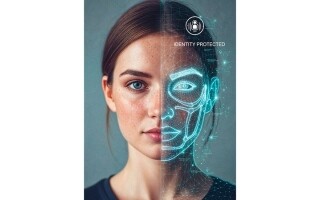
«Deepfake» refers to the creation of fake videos, audio recordings, or images of different individuals, making them appear realistic in a way that is difficult for the public to distinguish from the real thing, relying on the capabilities of artificial intelligence to generate or modify content in a manner that approximates reality.
Although these technologies were initially considered promising tools that could offer many benefits in fields such as entertainment and education, their spread and misuse have led to many risks and challenges.
Among the most prominent risks are defamation and reputation damage, where fake content is used to directly target individuals with the aim of harming them or tarnishing their image in the public eye.
Risks also include financial fraud, as voice deepfakes are sometimes exploited to impersonate officials or well-known individuals to request money transfers or execute fraudulent operations.
Additionally, there are economic and cyberattacks, which include damage to companies through the creation of fake videos aimed at undermining their credibility or affecting their stock value, as well as using voice deepfakes to obtain confidential information.
Other risks include misinformation and the difficulty of verifying information. The widespread use of this technology has made it difficult to verify the authenticity of content on social media platforms, increasing the likelihood of the spread of fake news and misleading information.
Despite the fact that artificial intelligence is the foundation upon which deepfakes are built, it simultaneously provides tools to counter this phenomenon. It can be used to analyze and detect fake content through advanced mechanisms capable of detecting subtle inconsistencies in images, videos, and audio that are difficult to spot with the naked eye.
Cybersecurity expert Imad Al-Hafar said: «The development of AI tools has contributed to the increased spread of deepfakes and cyberattacks, but at the same time, it has provided the necessary tools to confront and detect them through technical systems and specialized solutions».
He added: «AI technologies enable the detection of minor errors in images, videos, or messages, such as inconsistencies in lighting in videos or images, or analyzing facial movements to identify differences between natural and fake movements».
Al-Hafar emphasized that «one of the most important factors in combating deepfakes is increasing users' awareness of verifying circulated videos and their goals, and not rushing to believe in or contribute to their spread without awareness».
Defamation and reputation damage.. Financial fraud.. Economic and cyberattacks.. Misinformation and difficulty in verifying information.
On the other hand, technology expert Jis Kim said: «Just as artificial intelligence has created the challenges of deepfakes, it has also provided advanced tools to counter them, whether by analyzing and detecting videos or analyzing facial movements to clarify the differences between natural and fake facial movements».
He added that «one of the tools to counter the challenges of deepfakes is documenting content using technologies such as (digital fingerprinting) or (digital signature)».
4 risks of «deepfakes».