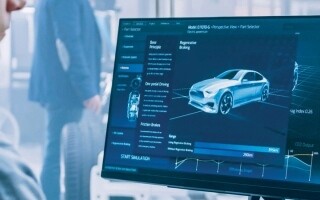
Analysts say that the increasing use of automated driving systems and communication technologies in cars not only does not reduce the driver's role and brings pleasure to some, but also exposes car owners to the risk of hackers trying to hack into their car systems remotely. It is expected that the likelihood of cyberattacks on cars will increase due to the growing role of software and autonomous driving, according to British BMI, a subsidiary of Fitch Solutions financial services company. Analysts warn that cyber risks for drivers will increase amid the 'ongoing acceleration towards software-dependent vehicles,' which are being integrated into the broader digital infrastructure of communication and information networks. Although the idea is that car manufacturers provide 'advanced navigation systems, seamless wireless updates, improved efficiency, and an enhanced driving experience,' the downside is that vehicles are vulnerable to internet hackers, just like any other internet-connected device. BMI noted that researchers were able to hack Subaru and Kia models using only a license plate number, which allowed them to 'remotely control the car's main functions and access its location records and personal contact information.' BMI added that internet-connected cars pose risks not only in terms of reduced privacy but also in the possibility of compromising the car's functions, warning of 'dangerous scenarios' where hacked cars are controlled remotely, leading to 'redirecting the car's traffic or hijacking it.' Researchers confirmed that the ball is now in the court of car manufacturers to develop adequate protective systems against hackers to protect drivers.