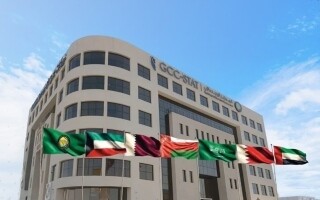
On the occasion of the 54th Union Day of the United Arab Emirates, the Statistics Center of the Gulf Cooperation Council issued a special release highlighting the key social and economic indicators achieved by the UAE. The report noted that the UAE ranked first regionally and seventh globally in social cohesion, reflecting the strength of the country's social fabric. The release stated that economic plans are following a clear path, starting with diversifying income sources, moving to building a knowledge-based economy, and ending with leading future sectors. It mentioned that the country has undergone economic and strategic transformations, including launching the UAE's Artificial Intelligence Strategy 2031 to make technology a pillar of development, and adopting plans for food and water security extending to 2036 and 2051 to ensure sustainability. This includes developing smart cities in Dubai, Abu Dhabi, and Fujairair as part of horizontal plans until 2040, alongside expansion in technology, space, renewable energy, and advanced industries. The UAE achieved qualitative leaps in competitiveness indicators, reaching fifth place globally in the 2025 overall competitiveness index and leading in 223 indicators according to the latest competitiveness reports. It also ranked among the top five countries in the world for 444 indicators. Additionally, the UAE ranked tenth globally in soft power and first globally in entrepreneurship for the fourth consecutive year. The report highlighted that the UAE's sovereign wealth funds are among the world's most powerful investment arms, as they not only manage wealth but also play a strategic role in securing the future and enhancing economic strength. The release pointed out that the UAE has transformed from a smart government to an AI-driven society, achieving first place globally in communication infrastructure and second place in AI readiness for 2025. It conducted the first-ever government transaction using the 'digital dirham' in a historic and unprecedented step in the region, with over 90% of government services being digitized. The UAE also topped the world in digital and technological skills. The report added that the UAE launched massive investments to be among the leading countries in the global energy transition, committing over 600 billion dirhams to renewable energy by 2050. It adopted the National Green Hydrogen Strategy, targeting a production of 15 million tons by 2050, and the UAE ranked sixth globally in talents supporting the green transition. The release noted that the UAE has transformed into an Arab and international space power in a few years, with the Hope Probe reaching Mars as the first Arab mission to the Red Planet. It is also working on the 2028 asteroid belt exploration project and the 2117 Mars Settlement project, considered one of the world's largest future projects.