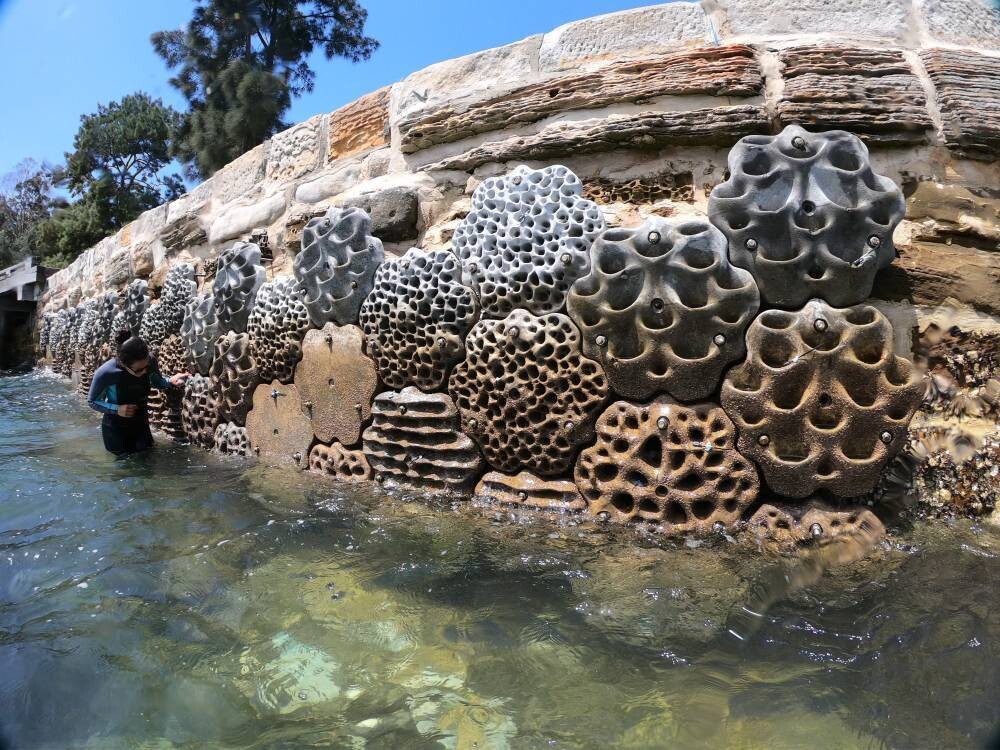
Dubai's DP World Group has completed the first phase of its flagship project to support marine life at Jebel Ali Port. The project involved installing 1,000 'living marine structures' designed to transform sea walls into thriving habitats, enhancing biodiversity and improving the efficiency of coastal infrastructure. This step marks a successful extension of the group's experience at the Callao Port in Peru.
These panels were developed in partnership with the scientific program of the Sydney Institute of Marine Science 'Living Seawalls'. The project is set to expand to 6,000 panels by 2028, which, upon completion, will form the longest continuous waterfront in the region dedicated to supporting natural ecosystems.
The panels feature diverse engineering designs that mimic natural rock formations, such as rock pools, allowing marine organisms to settle and grow, thereby converting coastal structures into life-supporting marine habitats.
Abdullah bin Damithan, CEO of DP World for the Gulf Cooperation Council, stated that ports play a vital role in enhancing coastal resilience. This program demonstrates how infrastructure can support trade while also contributing to the restoration of natural habitats. By integrating research-based designs across our ports, we are enabling marine ecosystems to stabilize and thrive in environments that were previously of low biological value.
A biodiversity monitoring program at Jebel Ali Port will commence in 2026 to analyze the impact of these new panels and contribute to the global body of knowledge on the role of ports in supporting environmental resilience.
The project is part of DP World's Oceans Strategy and supports global biodiversity goals under the 'Kunming-Montreal Global Biodiversity Framework', reflecting the group's commitment to investing in sustainable coastal infrastructure across its international network.
The project in Jebel Ali was designed following the success of a pilot program at the Callao Port in Peru, where 66 species across 12 marine groups were recorded within 12 months, including seven species that appeared only on the panels' surfaces. No invasive species were recorded, while algal diversity improved and the site's ecological functions enhanced, reflecting the high effectiveness of nature-inspired designs.
DP World continues to expand its nature-positive projects, including supporting the 'Dubai Coral Reef' initiative, one of the world's largest coral reef cultivation and restoration projects aimed at boosting marine biodiversity and reducing carbon emissions impact, developing circular economy models in port waste management, and launching additional ocean protection programs.
Amid growing environmental pressures on coastal cities, the living sea walls project in Jebel Ali serves as a scalable global model that integrates science, sustainability, and port development.