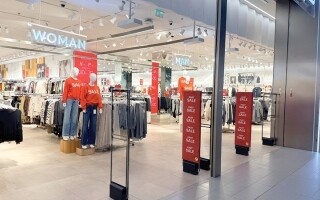
Retail markets in the country are witnessing heightened competition between shopping mall stores and e-commerce platforms through clearance and end-of-season sales, featuring discounts ranging from 20% to 50%, with a focus on clothing and footwear. Subsequently, e-commerce platforms launched their own clearance and end-of-season sales with discounts reaching up to 80%, along with cashback offers of up to 15%, coupled with benefits like fast and free delivery, and expanding these offers to include clothing, footwear, fragrances, watches, and sports equipment. Consumers surveyed by 'Emirates Today' stated that the current clearance and end-of-season sales, available in both traditional stores and via online platforms, are a positive development that increases shopping alternatives and choices, meeting the diverse needs of families. Retail specialists attribute the growing competition between stores and e-commerce platforms to the desire to increase market share during this period, which is considered a peak season for consumer shopping. They note that the variety of offers stems from the marketing policies of platforms, which operate with lower overhead costs, enabling them to offer discounts for a specific category of consumers compared to stores that rely on shoppers who prefer to experience products before purchasing. In detail, consumer Ashraf Abdel-Aati said: 'The current clearance and end-of-season sales, whether in stores or on online platforms, provide many alternatives for purchasing winter clothing, footwear, and New Year's gifts, making the expansion of competitive offers a positive sign.' Meanwhile, consumer Said Hamdy said: 'The expansion of end-of-season sales offers families more alternatives and choices, whether in terms of discounts or the goods covered in each traditional store or online platform.' As for consumer Maryam Adel, she highlighted the differing features of end-of-season sales offers between stores and e-commerce platforms. She said: 'For example, products that cannot be found on sale in shopping malls can be purchased through e-commerce platforms, and at the same time, one can benefit from the features offered, either in stores that provide discounts, loyalty points, and easy exchange and returns, or through platforms that offer cashback ranging from 5% to 15%.' In the same context, consumer Karim Abdel-Rahman said: 'The competitiveness of end-of-season offers between stores and platforms provides families with options that suit each consumer's nature, as some family members prefer shopping via platforms, while others prefer shopping from stores, and thus, providing more extensive shopping alternatives meets the diverse needs of shoppers.' Variety of Channels: On this matter, the sales manager of a ready-to-wear clothing store, Mohamed Ali, said: 'It is difficult to compare offers between physical stores and e-commerce platforms due to the difference and variety of their methods, as each has advantages not present in the other, and therefore, it is natural for clearance offers to vary in each.' He explained that 'platforms operate with lower overhead costs, which allows them to widen the discount rates and offers, while some consumers still prefer to try on and see clothes or shoes in person before buying.' On the other hand, the sales manager of a footwear store, Baig Joy, said: 'The difference in marketing policies between physical stores and e-commerce platforms makes the nature of offers different between them, in addition to the intensifying competition and the drive to increase sales shares during this period, which is considered a season of high consumer demand, whether related to purchasing winter essentials or gifts, prompting platforms and stores to increase their competitiveness with different and innovative offers.' Executive Sales Director of an e-commerce platform, Ripal Ulbek, confirmed that 'the expansion of clearance offers between stores and e-commerce platforms increases competition and reflects positively on consumers, especially since families include youth who prefer shopping through platforms, and other segments that still prefer buying from stores in traditional ways, and therefore, these offers are complementary and not just competitive.' He considered that 'local markets can absorb the current extensive competition between stores and e-commerce platforms, especially with the rise in population and the momentum of tourist crowds in markets, which enables all entities in the market to launch offers that suit their marketing policies to attract consumers and increase their market share.' He also pointed out that 'e-commerce platforms are starting to increase their competitiveness not only through discount percentages but also through cashback offers and fast, free delivery.' Marketing Policies: Retail affairs expert Ibrahim Al-Bahr said: 'The difference in the nature of offers between e-commerce platforms and traditional stores stems from differences in marketing policies and the nature of operating costs, which are significantly lower for platforms, enabling them to raise discount rates in contrast to the advantages of stores that bet on consumer loyalty, who still prefer to shop physically in stores.' He added that 'the increase in competition is a natural matter with stores and platforms aiming to increase their market share.' He continued: 'It is important for consumers to be aware that they should not buy just because there are discounts, but must compare prices among the available offers to determine the most suitable and beneficial ones before purchasing.' • Stores offer discounts up to 50%, while e-commerce platforms raise discounts up to 80%.