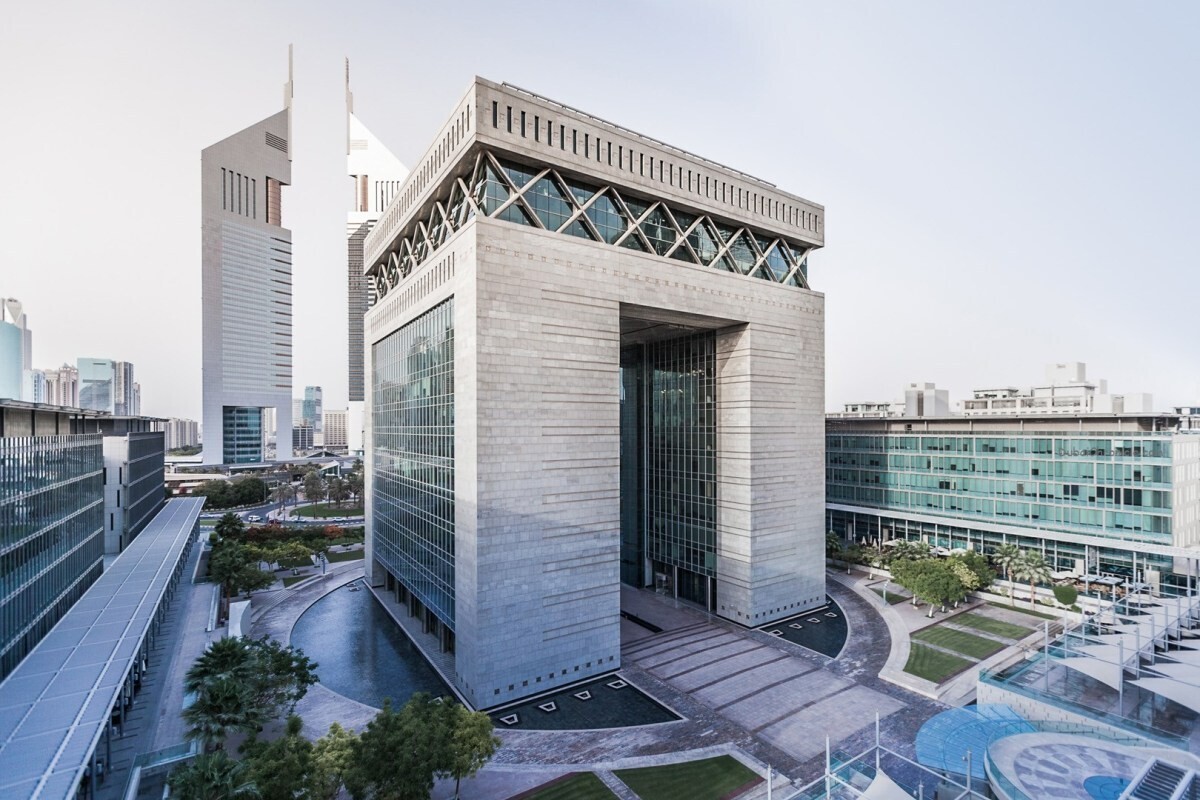
Global investors pay attention when talent and ambition concentrate in one place. Foreign investment continues to surge into the UAE despite geopolitical uncertainty. The country has ranked among the world’s leading destinations for foreign direct investment, drawing tens of billions of dollars annually as multinational companies expand regional headquarters and investment operations. The deVere CEO explains: “Wealth and investment clusters where ecosystems already exist.” Dubai offers deep capital markets, sophisticated regulation, world-class aviation links and one of the most developed financial services sectors anywhere between London and Singapore. “Once a city reaches that level of critical mass, it becomes extremely difficult for competing centres to replicate.” Technology is now playing a central role in the city’s next stage of growth. “The tech story in Dubai has accelerated dramatically. The scale of capital, talent and enterprise already flowing through the city speaks for itself. As global wealth continues to shift and international professionals build more mobile lives, Dubai’s position as a major trade and finance hub will only strengthen in the years ahead.” The UAE consistently ranks among the world’s leading destinations for high-net-worth individuals relocating wealth and businesses. Nigel Green concludes: “Investors follow opportunity, stability and scale. Businesses pause, investors reassess and some executives delay travel or hiring decisions. Those reactions are entirely typical during periods of regional tension, but they don’t alter the deeper trajectory of a financial centre like Dubai. Dubai’s success rests on decades of strategic economic planning, global connectivity and a clear commitment to attracting international capital and talent. A single episode of geopolitical stress won’t dismantle that foundation.” He continues: “What makes Dubai compelling is the combination of factors rarely found in one location. It operates as a major trading hub, a tax-efficient jurisdiction and a city designed with a forward-looking economic vision. Geography places it between Asia, Africa and Europe, which naturally positions it at the crossroads of global commerce.” Population growth illustrates how powerful that attraction has become. More professionals are building international careers, more families are living across borders and more capital flows through jurisdictions designed for global citizens. “We now advise more than 80,000 expatriate clients worldwide, and a growing share either lives in Dubai, owns property there or is actively planning a move.” Real estate remains an important element of investment activity, although it represents only one component of the broader financial opportunity. Nigel Green comments: “Dubai property attracts strong interest from expatriate investors. Global equities, fixed income, private markets and liquidity all play essential roles alongside property.” He adds that the structure of the market today differs significantly from the conditions that preceded the global financial crisis. “Dubai in 2025 is fundamentally different from the city in 2007. Dubai delivers all three. Zero income tax, global connectivity, personal safety and access to some of the fastest-growing markets in the world form a powerful combination. Dubai no longer needs to persuade investors of its relevance.” Dubai’s population has recently surpassed four million residents, with expatriates accounting for roughly 85–90% of the total. Nigel Green comments: “You have a city where a huge number of residents are international professionals, entrepreneurs and investors who have come to build businesses and careers. Energy of that scale naturally attracts capital.” The geopolitical conflict has done little to dent Dubai’s growing reputation as a dynamic global trade and finance powerhouse with a bright future ahead, according to Nigel Green, CEO of deVere Group. Regional tensions have sparked short-term caution in some corners of the business community, yet the structural forces that transformed Dubai into one of the world’s most important commercial centres remain firmly in place. Nigel Green says: “Whenever geopolitical risk rises, markets react quickly. Property cycles will include periods of consolidation, yet the underlying growth story remains powerful.” Investor migration trends reinforce that outlook. “Global investors and venture capital firms recognise that the Gulf is positioning itself as a serious centre for innovation,” notes Nigel Green. “When influential, multi-billionaire investors Ray Dalio describes the Middle East as a rising hub for capital and artificial intelligence, he’s reflecting a view already widely held among global institutional investors.” deVere Group moved its global headquarters to Dubai years ago after identifying the city’s emerging role in international finance. Nigel Green says: “We established our headquarters in Dubai because we could see the direction global mobility was taking. Population growth remains strong, economic diversification is deeper and the financial sector is far more mature. The city now functions as a genuine economic centre spanning finance, tech, logistics and international trade. Many professionals who establish themselves in the city choose to own at least one property, often more if they operate businesses locally. However, in a well-structured investment strategy, real estate forms part of a diversified portfolio rather than dominating it. AI, fintech and digital finance are expanding at remarkable speed.