In this context, the question is no longer: Are you talented? But: Can you reach the listener amid all this noise? Algorithms act as the hidden agent shaping taste. It is no longer just production companies that decide what is heard; algorithmic playlists and recommendations now play a crucial role in determining what reaches the public. These algorithms, which rely on user behavior analysis, do not seek the best in artistic terms, but rather "the most consumable." As a result, artists themselves have begun to adapt their work to suit this logic. This trend has intensified with the rise of TikTok, which shifted the focus from the full song to the short clip. Success is no longer tied to the structure of the work as a whole, but to its ability to produce a repeatable and shareable moment. Many songs that have topped global charts in recent years started as clips of just a few seconds, raising a sharp question: Is the song still a complete artistic unit, or has it become raw material for sampling and reuse?
In this reality, artists have reordered their sources of income, making live performances the cornerstone. While streaming provides reach, live shows offer the real return because they offer what cannot be digitized: the live experience, direct interaction, and the collective feeling. Thus, balance was restored in an unexpected way, where recorded music became a means of reaching an audience, while concerts transformed into the economic goal.
However, talking about a decline in value should not be understood as a final judgment, but rather as a description of a shift in evaluation criteria. Art has historically always adapted to its mediums. While algorithms have imposed certain limitations, they have also opened up new spaces for experimentation, especially for independent artists who had no foothold in the old system.
In the digital age, the song is no longer an entity produced to be owned and rediscovered over time. It has transformed into a continuous flow within an infinite space of sounds, where artistic value is mixed with data, and success is the result of algorithmic equations as much as it is the fruit of talent or creative vision. These changes, led by platforms like Spotify and Apple Music, have not only changed the shape of the music industry but have also touched the essence of the song itself, and what it means to be an artist in an era where music is measured by the number of streams and consumption, not by the depth of impact and creativity.
At the end of the 20th century, the relationship between the artist and the audience was mediated by a clear, physical medium: the album. The listener would buy the work to keep it and revisit it as a complete experience, from the cover art to the final musical track. The value here was tangible, and success was measured by precise, unambiguous numbers: the number of copies sold. But with the digital shift, this structure collapsed, replaced by a new model based on continuous availability instead of ownership. The listener no longer buys the song; they access it as part of an infinite library. This made music closer to a continuous service than to a standalone product.
This transformation revived the industry economically after years of sharp decline due to piracy. Global revenues rose again to exceed tens of billions annually, driven by digital subscriptions. However, this revival hides a deep contradiction: while money flows at the industry level, many artists feel they are outside this circle. The return that platforms give for each stream is so small that achieving a stable income requires astronomical numbers of streams, a feat only possible for a few major names. This creates a clear structural flaw: the system rewards and reproduces pre-existing fame, leaving the majority on the margins without a path to sustainability.
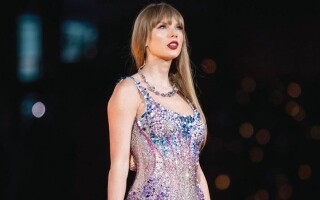
This tension between reach and value has led prominent artists like Taylor Swift to take public stances against the streaming model. She temporarily removed her work from Spotify in protest of what she saw as the devaluation of music. Her protest was not just a financial dispute but an expression of a deeper vision that sees the song as a work of art that must be valued, not reduced to a number in a database. In the same vein, the renowned musician Thom Yorke expressed his rejection of streaming logic, arguing that it serves the corporations more than the artists, especially those who have not yet reached a wide audience.
But the paradox is that this model, despite its criticisms, has also provided unprecedented opportunities. An artist is no longer dependent on a large production company to reach the world; they can, in theory, upload their work and make it available to millions of listeners in moments. This "digital democracy" has opened doors to new voices from around the globe, but in return, it has created a state of massive saturation where tens of thousands of songs are added daily. The very act of getting noticed becomes a battle in itself.
Here a creative tension emerges between the pressure of the digital market, which pushes towards simplification, and the artist's desire to preserve their uniqueness and complexity.