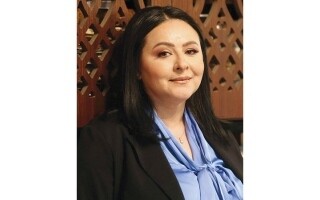
In literature, endings are not a break, but an extension of a memory that refuses to disappear. Shahla Al-Jailani participates in a session titled 'The Taste of Homes,' where we explore thousands of stories hidden in the corners of houses, the voices that have passed through, and the events etched in memory. In the session 'In Joys and Sorrows,' Egyptian novelist Ezzat Al-Khowayi represents a voice that contemplates 'the aesthetics of living' and the details of daily life that might escape a passing glance. He draws inspiration from architecture, art, and the contradictions of modernity, viewing writing as a continuous building process that knows no stability. In his book 'Contrary to What Was Preceding,' his philosophical conception of time is manifested. He writes: 'Endings are merely beginnings disguised in the guise of departure.' Al-Khowayi, at the Emirates Airline Festival of Literature, through the session 'In Joys and Sorrows,' seeks to prove that every ending in a text is, in fact, a window that opens the reader's consciousness to beginnings that had not occurred to them. Languages of Places On the other hand, novelist Ahmad Al-Mursi possesses a remarkable ability to build worlds that connect human sentiment with societal transformations. He draws his stories from the depths of history and moments of difficult choice, focusing on humanity's ability to start anew even while standing amidst ruins. In his novel 'A Bet on the Honor of Lady Mitty,' he summarizes his philosophy of facing crises by saying: 'Sometimes, we must let go of the wishes that refuse to be fulfilled. Part of our attachment to these false hopes is because they are part of our past, part of our souls. But who, other than us, has sanctified these dreams? Some things are sacred merely because time has passed over them. We are not born with our dreams; we create them and add them to ourselves, like wings that enable us to fly. But... who said that if we cut off these wings, we will die?' Al-Mursi's presence at the festival, especially in the session 'Bells of Cities: The Cultural Languages of Places,' is a voice that seeks truth in the open-ended stories full of possibilities. Emirati Names The program of the 18th Emirates Airline Festival of Literature this year will feature the names of an elite from the United Arab Emirates, in addition to prominent writers and poets. Among them are Shahab Ghanem, winner of the 'Al Owais' Award for Creativity, Nada Al-Najjar, shortlisted for the International Prize for Arabic Fiction, Fatima Al-Zaroori, winner of the UAE Novel Award, Maryam Al-Zarouni, a member of the Emirates Writers' Union, and poet Ali Al-Shaali, founder of the 'Hudhud' publishing house. The Emirati presence also extends to children's literature through the participation of a group of writers and creative artists. Thinkers, creators, and people with diverse experiences from around the world gather during the 'Festival,' offering a rich program of discussions and dialogues aimed at satisfying all audience segments. With the wide participation of a group of writers, thinkers, and creators from all over the world, the activities of the 18th Emirates Airline Festival of Literature kick off today, running until the 27th at the InterContinental Dubai Festival City hotel. The festival offers book lovers a comprehensive program featuring over 200 cultural and interactive sessions, with more than 200 speakers from over 40 nationalities, reflecting the event's global standing and its role in promoting cultural and intellectual dialogue. The festival attracts authors of famous crime novels, Ruth Ware, whose novel 'The Woman in Cabin 10' was adapted into a drama series for Netflix, Egyptian writer Omar Tahrir, British writer Rachel Clarke, novelist Caleb Nelson, winner of the Booker Prize, writer Curtis Jobling, and scientist Big Mani, famous for turning science into interactive content on the TikTok platform, as well as Emirati poet Ali Al-Mazimi, winner of the 'Silk Road' literary award. The festival also welcomes the return of a number of names beloved by the public, including Shama Al-Bustaki, Jalal Burjas, Badria Al-Bushra, Dr. Shashi Tharoor, and British illustrator and author Oliver Jeffers. 'The Most Beautiful Woman in the World' In the 18th edition of the festival, five prominent Arab novelists will also gather to explore that mysterious region where endings meet beginnings, how memory turns into text, and pain into life. They will recount their journey with writing and how they weave those worlds that captivate readers. The event will bring together creators: Huda Barakat, Saud Al-Senausi, Shahla Al-Jailani, Ezzat Al-Khowayi, and Ahmad Al-Mursi. Lebanese author Huda Barakat is known for her unique ability to write from 'the edge,' observing characters at their moments of greatest breakdown and forced beginnings, far from their homelands. For Huda Barakat, writing is an attempt to mend an identity shattered by exile. In her work 'Hind or The Most Beautiful Woman in the World,' she contemplates the transformations of the soul, beauty, and time, saying: 'I remember the story, I remember my mother's face, her mouth, the color of her red lipstick. She tells it with happiness and sweetness, or with a hint of doubt or annoyance... A simplicity like pressing a light button in a dim light, and the light at that moment.' She writes of endings that do not die but remain in the characters like undelivered messages, affirming that the story continues as long as there is a voice that refuses silence. Huda Barakat will share her visions in the sessions 'What Survived of the Story' and 'The Most Beautiful Woman in the World.' 'The Clay City's Journeys' As for Kuwaiti novelist Saud Al-Senausi, he views writing as an investigative act that seeks the roots of Gulf identity and its historical transformations. He does not write about the past as a bygone time, but as a living beginning that affects our present. In his epic 'The Clay City's Journeys,' he delves into the philosophy of survival and extinction, saying: 'Time is an illusion, O Abu Haddab. It is but adjacent lives. What you felt happened in a past time is happening now in another place, in a neighboring life.' His work derives its strength from the struggle between tradition and modernity and from endings from which new myths are born, reshaping our consciousness of place. The reader can explore this in two sessions featuring Saud Al-Senausi: 'The Myth of Salt of Truth' and 'From the Ocean to the Gulf.' 'The Taste of Homes' On her part, Dr. Shahla Al-Jailani blends academic precision with emotional flow in her literary work, focusing on the collective memory that links the East and the West. She is inspired by great journeys and historical intersections that shape human destinies. In her novel 'Hanna Diab's Room,' she evokes the spirit of the storyteller to express her concept of beginnings; for her, the story is the last refuge against oblivion.