The United Arab Emirates today boasts one of the most advanced and influential media systems in the world. This system features significant diversity, especially in television broadcasting, where dozens of satellite channels in multiple languages air many purpose-driven programs that capture a large audience.
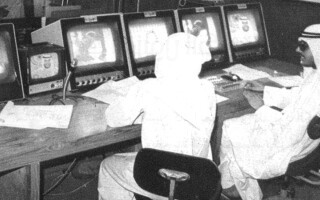
Looking back at the roots of this success and distinction, there are historical moments that remain present in the Emirati consciousness. These moments document the launch of broadcasting from the 'Kuwait Television from Dubai' station, which began on September 9, 1969. This step served as a pioneering model for Gulf cooperation by building a visible Emirati media edifice, even before the formation of the United Arab Emirates and the declaration of the state.
The station's launch was a direct response to a request from the late Sheikh Rashid bin Saeed Al Maktoum, may God rest his soul, and under the direction of Kuwaiti leadership, which provided technical, material, and human support to equip and operate the station. The station became an extension of Kuwait's pioneering experience in television broadcasting at the Gulf and Arab region level at the time and played a significant role in supporting and developing the media sector in the Emirates before the federation's formation.
The official inauguration ceremony of the station was attended by high-level figures, including the late Sheikh Rashid bin Saeed Al Maktoum and Sheikh Sabah Ahmed al-Jaber al-Sabah. The ceremony broadcast a recorded message from the late Sheikh Jaber Ahmed al-Sabah, and Sheikh Hamdan bin Rashid Al Maktoum delivered a speech thanking the sisterly State of Kuwait for its support. In turn, the late Sheikh Sabah Ahmed al-Jaber al-Sabah spoke about the depth of relations between the two brotherly countries, embodying the spirit of Gulf cooperation that preceded the official establishment of the United Arab Emirates.
'Kuwait Television from Dubai' became the nucleus for the launch of 'Dubai Television'. This was the result of tremendous efforts by Kuwait to equip the station with machinery, devices, and tools, and to supply it with the resources and television materials necessary for its operation. Furthermore, Kuwaiti media was one of the oldest in the Gulf and had a clear social and cultural impact on the development of Emirati media through the exchange of experience between journalists and students from both countries.
The role of 'Kuwait Television from Dubai' was not limited to broadcasting only; the station also enlisted a team of well-known Kuwaiti presenters, such as Jasim Al-Shuhaybi, Saleh Al-Jayshi, and Majid Al-Shatti, to transfer their expertise to the Emirati side. This station also contributed to training the first generation of Emirati directors and presenters who later led local media, among them: Ahmad Qasim Ali, Saeed Al-Ghaith, and Housa Al-Asily.
During that period, the station was managed by an administrative and technical team of Kuwaitis, Emiratis, and Arabs, led by Kuwaiti journalist Muhammad Al-Mahna. The daily broadcast duration was four hours in the evening, then it became six hours. After the formation of the United Arab Emirates and the declaration of the state, broadcasting extended to eight hours in the evening, with a morning broadcast during the summer period.
The headquarters of 'Kuwait Television from Dubai' was in the 'Al-Qusais' area. At its founding, it had 63 employees, and the number grew until Emiratis attracted to work in the media field constituted 90% of the workforce, alongside a parallel local Emirati production output in addition to other Arab and foreign programs aired.
Kuwaiti production, including serials and programs, constituted about 25% of the total content, which helped shape the artistic tastes and cultural awareness of the Emirati audience during that period.
Management of the 'Kuwait Television from Dubai' station passed through three administrations, each leaving its mark according to the requirements of each phase. First, Kuwaiti journalist Muhammad Al-Mahna headed the station's first administration, which led a work team that came from Kuwait and made great efforts to equip the station with all necessary machinery, devices, offices, and studios for news and programs.
Then, journalist Jasim Al-Shuhaybi took over management, leading a fully local work team that did its utmost to launch new programs and develop the station's work. This enabled the station to achieve a 50% local production rate in its broadcast hours.
In the third phase of this period, journalist Hamad Mumin took over management of the 'Kuwait Television from Dubai' station, continuing to push the local production wheel forward, with additions related to the events that coincided with several meetings held by the rulers of the Emirates at that time in preparation for the establishment of the federal state.
A New Name
On the evening of December 2, 1971, the United Arab Emirates was declared. Following this, the television station's broadcast began with the national anthem and the flag of the United Arab Emirates under a new name: 'United Arab Emirates Television from Dubai'. The station continued its journey for seven and a half years, until 1979, under this name.