Recent times have witnessed a significant expansion in the use of advanced generative artificial intelligence technologies, which have manifested through strong competitive elements and new innovations in what is known as «digital memory revival» technologies. These technologies rely on digitizing personal experiences and photos, storing them, and retrieving them through innovative interactive methods, allowing artificial intelligence to play an increasing role in reconstructing and reviving memories in the form of dynamic digital images.
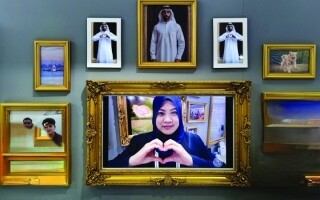
Several companies in local and global markets have launched initiatives and systems based on these technologies, aiming to employ them in various fields, whether for medical, educational, or entertainment purposes. These initiatives have included the use of advanced digital panels capable of converting old photos of family members from different regions into interactive digital experiences, presented in a lively manner through AI systems.
The new innovations rely on the capabilities of generative AI to reconstruct visual and sensory experiences that may have faded or been lost over time. They are particularly utilized in the medical field, where advanced algorithms are used to create images or short video clips from detailed descriptions of personal memories. This helps patients with conditions like Alzheimer's to retrieve details from their past, which contributes to improving their psychological state and enhancing their social communication with their families and environment.
These modern innovations provide more advanced means for preserving memories, data, and events through digital archiving. They allow for the long-term preservation of photos and data from damage or loss after converting them into interactive video clips that interact with the historical data of individuals and places, relying on AI technologies to generate what is known as «digital twins».
This technology enables the interactive revival of memories of deceased individuals through virtual and augmented reality systems, to re-experience important moments from the past in a moving and emotional way.
Furthermore, these technologies have found their way into the education sector, where they are used to produce interactive content that features historical figures or past events in realistic simulation videos based on AI. These videos are employed in teaching history, geography, and other sciences through smart boards or virtual reality glasses, making the learning process more engaging and rich with visual information.
Commenting on the development of these technologies, the CEO of «JL Standard», Namwoong Joo, stated that «AI-powered digital memory revival technologies are among the most advanced innovations of the current era, opening new horizons that were not previously available in various sectors».
Joo added to «Al Ittihad» that technology markets are currently witnessing increasing competition in this field, pointing to the launch of smart screens and panels that use AI to reconstruct images and videos and clone voices in an interactive style, aiming to transform memories into live digital experiences that enhance human communication with deeper and more realistic aspects.
Meanwhile, the Projects Manager at «iFly Tech», Halima Jabli, said that «digital memory revival technologies give families a unique opportunity to restore precious moments from the past», explaining that these technologies allow for converting old photos into moving images via AI to meet families' needs in recalling memories, whether with living individuals or those who have passed away.
She added that the panels and screens designed for this purpose are displayed in homes as smart digital frames containing photos of relatives or deceased loved ones, with the ability to animate them within the frame in short, realistic video clips, giving them an emotional and impactful character. Interactive content can be produced that shows historical figures or past events in realistic simulation videos. New technologies help Alzheimer's patients retrieve details from their past.