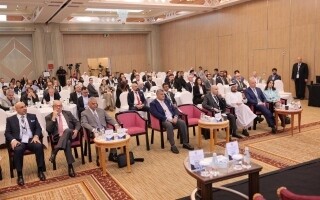
Today in Dubai, the ninth annual Health Insurance Conference 2025 kicked off, with the participation of over 200 experts and decision-makers in the sector at both local and regional levels. The conference highlights topics of paramount importance, foremost among them being the current state of the health insurance market in the United Arab Emirates, as well as current and future challenges. In its technical segment, the event addresses the role of artificial intelligence in risk management and fraud prevention in health insurance, digital transformation and its role in the sector from an administrative and technical perspective, and the role of blockchain technology in claims processing, analytics, and policy and pricing formulation. In his opening conference speech, Chairman of the Board of Directors of the Emirates Insurance Association, Khalid Mohammed Al-Badi, stated: "The insurance sector in the United Arab Emirates enjoys great attention from our wise leadership and government due to its positive impact on economic and social development." He noted that "health insurance has played and continues to play a vital role in enhancing public health and facilitating universal access to healthcare services." At the same time, he pointed to "the exceptionally important role of this type of insurance in facing crises, and especially during the (COVID-19) pandemic, which brought the importance of health insurance to the forefront." Al-Badi also clarified that the ideas and discussions to be presented by speakers and participants will provide a platform to enhance collective interaction and cooperation. Researchers will address the technical and legal aspects covered by health insurance, in addition to trends and developments in this vital sector. He confirmed that the health insurance market in the UAE is poised to achieve better performance and growth in 2026 and the subsequent years. He stated that the market is undergoing corrective measures to technically and professionally assess health insurance policy premiums after insurance companies confirmed that non-technical competition that prevailed in some years was not beneficial in the medium to long term. Al-Badi mentioned that insurance companies in the country have made significant strides in leveraging the digital revolution and launching numerous innovative products. He indicated that the period ahead will see more of these products, as they are a solution to many challenges and a path to the next stage of elevating service levels. Healthcare Sector Al-Badi noted that the healthcare sector in the United Arab Emirates is preparing for strong growth driven by macroeconomic factors, steady population growth, rising aging rates, the expansion of mandatory health insurance policy to cover all emirates, and the boom in medical tourism. He expects that the economic diversification strategies led by the UAE government and national development plans will contribute to improving the infrastructure and private facilities in the healthcare sector and elevating them to meet the highest international standards. Positive Indicators In comments on the sidelines of the conference, Chairman of the Health and Life Insurance Committee of the Emirates Insurance Association, Abdulmohsen Jaber, confirmed the presence of strong positive indicators that support forecasts of the health insurance market achieving better performance and growth in 2025 and 2026. He projected (based on current trends and available data) that growth will exceed the rates recorded in previous years, fueled by rising employment rates and thus an increase in the number of employees eligible for mandatory health insurance, in addition to economic growth, strengthening of legislative and mandatory regulatory requirements, and governments continuing to expand the scope of mandatory health insurance to include new categories such as residents and visitors, as well as activating stricter regulatory mechanisms to ensure companies' compliance with renewing and providing insurance for their employees and their families. All this is supported by growing health awareness among individuals and institutions and the development of digital infrastructure for managing claims and electronic medical records, which contributes to increasing service efficiency and reducing operational costs. Insurance Policy Premiums In response to a question about the continuation of complaints regarding annual increases in health insurance policy premiums and projections for the expected increase rate in 2026, Jaber stated that the continuation of complaints about annual premium increases is due to a complex and interrelated set of factors affecting the insurance and healthcare market globally and locally. Key among these are medical inflation, rising costs of services and treatment, and the continuous increase in the prices of medicines, medical supplies, and modern diagnostic and therapeutic technologies such as "surgical robots" and advanced equipment. Additionally, there is excessive or unnecessary use, particularly when it comes to undergoing unnecessary medical examinations or consultations, as well as governments introducing new coverage requirements or expanding basic benefits that insurance companies are required to provide. Regarding price forecasts for 2026, Jaber projects (based on an analysis of current trends in the health insurance market and economic factors) that the percentage increase in health insurance policy premiums will range from approximately 5% to 10%, with a possibility of a higher percentage in case of unexpected increases in treatment costs or new legislative changes. However, he clarified that these estimates are approximate and depend on prevailing economic and health conditions, emphasizing that insurance companies strive to strike a balance between providing comprehensive health coverage and ensuring service sustainability for customers. Operational Efficiency Regarding the main challenges that have affected and continue to affect the efficiency of health insurance operations, Jaber said: "The sector still faces a number of fundamental factors that hinder achieving the desired operational efficiency. Among the main of these challenges are the continuation of unethical practices in using health insurance services, including the misuse of medical coverage by some beneficiaries, as well as the inflation of medical bills and the rising cost of services provided. Also, the excessive prescription of medicines is one of the main challenges that contribute to increasing the financial burden on insurance companies. This requires enhancing medical monitoring and audit mechanisms, as well as intensifying awareness efforts to rationalize usage and ensure services are provided according to actual need." Key Pillars Regarding the main features of the Emirates Insurance Association's plan in the health insurance sector and the topics to be focused on in 2026, Jaber said that it is based on three key pillars, the aim of which is to enhance sectoral efficiency, improve the customer experience, and support financial sustainability. The plan will particularly focus on intensively informing the health insurance community and individuals about the application of artificial intelligence and machine learning solutions to speed up approvals and claims and reduce operational errors. Additionally, it will focus on informing the community and individuals about the development of applications and websites that allow the insured to manage their policies, as well as focusing on adapting and fully implementing any new legislation or regulatory standards issued by state regulatory bodies to ensure the highest levels of transparency and protection for the insured.