As part of its strategy to support Arabic content and enhance the role of knowledge in building a cohesive and confident society, the Publishing and Translation arm of the Mohammed bin Rashid Library has launched the book "Culture and Its Role in Building Society: The Experience of the United Arab Emirates." Authored by nine Emirati writers, the book offers a qualitative vision that enriches the Arabic library with publications reflecting the UAE's status as a regional and global hub for knowledge.
This publication is part of the "Community Year 2025" initiatives under the slogan "Hand in Hand," highlighting the pivotal role of culture in supporting social cohesion, fostering a spirit of volunteerism and cooperation, and human development. This aligns with the national trajectory extending from "UAE Vision 2021" to "We the UAE 2031" and "The Centennial 2071."
The book features contributions from a group of academics and experts who provided a scientific and objective perspective on the comprehensive cultural renaissance in the UAE, including prominent figures like Chairman of the Mohammed bin Rashid Library Board of Directors Mohammed Ahmed Al-Murr and writer Ali Obaid Al-Hamli.
Through its multiple chapters, the book addresses key themes, including the status of culture in the leadership's vision, its translation into effective policies and institutions, the role of governmental and non-governmental cultural institutions in serving society, and the importance of public libraries, especially the Mohammed bin Rashid Library, in promoting a culture of reading and intercultural dialogue.
The book represents a qualitative addition to the Arabic library, offering an intellectual experience that reflects the UAE's journey in building a society that continues its leading role in establishing a national model based on partnership, openness, and creativity.
"The importance of this book lies in its role in cementing culture's function in building society," said writer and journalist Ali Obaid Al-Hamli. "During the 'Community Year,' many aspects were discussed, such as educational and family matters, but this is the first time we have spoken about linking culture with society."
"The leadership has supported the establishment of several cultural institutions that were active before a dedicated cultural authority existed in Dubai, which confirms that culture originated from the people's interest from the start, and the state's role enhanced this landscape," he emphasized.
"Artificial intelligence is now entering all sectors, including culture," stated Dr. Badia Khalid Al-Hashmi. "I touched upon the components of Emirati culture and its specificity, then moved to the information revolution, communications, and AI and their impact on Emirati culture, and then about the continuity and change within this culture, praising the flexibility and openness of Emirati culture to other cultures."
"The book sheds light on culture in the UAE's leadership thought, which is an important aspect to address because it gives an idea of the cultural institutions, whether private or governmental, that did not come out of nowhere, but rather came from the leadership's support for the cultural aspect," she added.
"Culture in Emirati society is old," Al-Hamli continued. "In the 1940s, a cultural club was founded in Dubai, and at that stage, people's focus was on earning a living, especially as its sources were very limited."
"The book sheds light on culture in the UAE's leadership thought, which is an important aspect, as it gives an idea of the cultural institutions that did not come out of nowhere, but rather from the leadership's support for the cultural aspect," he reiterated.
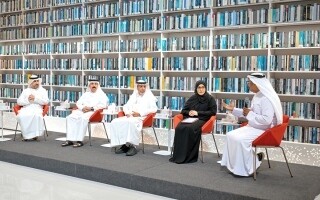
"This publication translates our firm commitment to enhancing the national cultural movement and embodies a clear vision based on investing in knowledge content capable of solidifying the national identity and boosting culture's presence in the development journey," stated Dr. Mohammed Saliq Al-Mazroui during the book's launch panel discussion.