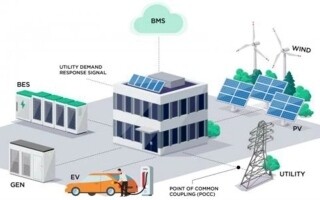
The Ministry of Energy and Infrastructure has announced the launch of a strategic and innovative project to implement Microgrid systems. This is a qualitative step that reinforces the state's approach to building a smart, flexible, and adaptable energy system capable of responding to various changes, thereby enhancing energy security, sustainability, and efficiency, and supporting the goals of the 'We the UAE 2031' vision in developing advanced, future-ready infrastructure. The project is the first of its kind at the state level; it was developed and implemented at the ministry's headquarters in the Emirate of Sharjah during 2025 as part of a forward-looking strategy targeting the enhancement of national readiness to handle electricity outage scenarios in emergencies and crises by adopting an integrated operational model that combines clean energy generation, storage, and management using advanced digital solutions. His Excellency Engineer Sherif Al-Mualla, Assistant Under-Secretary for Energy and Petroleum Affairs at the Ministry of Energy and Infrastructure, stated that the project reflects a qualitative shift in energy management at the building level, transitioning from a traditional model reliant on the central grid to a smart, decentralized model with independent operational capabilities. This enhances the reliability of electricity supplies and the continuity of essential services, alongside improving resource consumption efficiency and reducing costs and emissions. He added that the project has achieved tangible operational, environmental, and economic results in its pilot phase, including a reduction in annual energy consumption by approximately 362,000 kilowatt-hours, achieving financial savings close to 110,000 dirhams annually, decreasing carbon emissions by 76 tons per year, and increasing the contribution of solar energy to 30% of the total electrical load. It also enabled full operational flexibility of 100% in the event of sudden outages, ensuring service continuity without impact. He further noted that the 'Microgrid' project represents a significant leap in how energy systems in buildings are planned and operated, reflecting the UAE's direction towards building a more intelligent, flexible, and sustainable energy ecosystem. It not only boosts operational efficiency but also establishes a comprehensive national model that ensures the continuity of essential services under various conditions and enhances the readiness of infrastructure to face future challenges. He explained that the achieved results confirm that investing in smart energy solutions is no longer a choice but a strategic necessity to bolster energy security, reduce costs and emissions, and improve resource use efficiency. He pointed out that the ministry is collaborating with its partners in the government and private sectors to scale up the application of this model nationwide. He highlighted that the next phase will focus on mainstreaming the experience and expanding its application across the country, concurrently with developing a national technical and legislative framework that sets the necessary regulatory and technical standards for implementing microgrid systems, ensuring unified efforts and enhanced integration between federal and local entities and the private sector. He stated that the project comes within a comprehensive national vision aiming to reshape the country's energy system by adopting innovative solutions based on renewable energy and advanced digital technologies, thereby enhancing infrastructure efficiency, reducing the carbon footprint, and cementing the UAE's position as a global model in developing future sustainable and resilient energy systems.