The Council of the League of Arab States held its 165th regular session yesterday via video conference under the chairmanship of the Kingdom of Bahrain. During the meeting, the chairmanship of the Council of Ministers was transferred from the United Arab Emirates, which had chaired the previous 164th session, to the sisterly Kingdom of Bahrain.
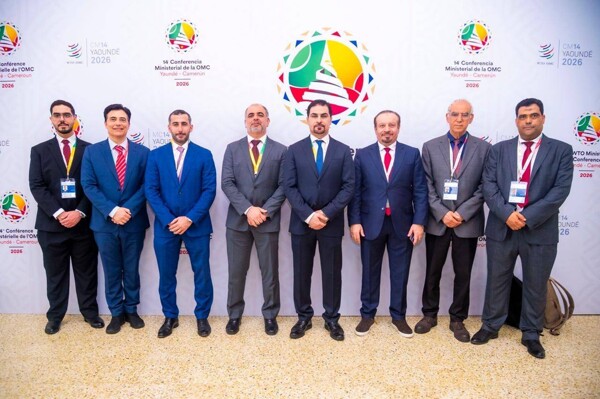
At the end of the meeting, a declaration was issued regarding the criminal Iranian terrorist attacks on the security and sovereignty of a number of Arab countries. The UAE delegation was headed by Khalifa bin Shaheen Al-Marri, Minister of State, who at the outset of his speech expressed his sincere thanks and appreciation for the cooperation and support during the UAE's chairmanship of the 164th session, especially during this sensitive and critical phase for joint Arab action.
Al-Marri stated that "February 28, 2026, marked a dangerous turning point in the geopolitical and geostrategic landscape of the Arab region. The Iranian terrorist aggression against the UAE and sisterly Arab countries has brought us to a critical and highly dangerous moment whose repercussions will be of great complexity, not only on the regional arena but on the Arab and international scenes."
He emphasized that "the Iranian aggression continues, with daily terrorist attacks against our Arab countries with volleys of ballistic missiles and suicide drones, deliberately and repeatedly targeting civilian facilities and vital civilian infrastructure, including ports, airports, shopping centers, residential areas, energy production and processing facilities, water desalination plants, information and communication centers, and more. Even diplomatic and consular premises have been targeted, with civilian casualties of various nationalities among the dead and injured."
Al-Marri stressed that "the Iranian aggression against our countries is illegal and unjustified, a blatant violation of our sovereignty, international law, and the UN Charter, and a serious threat to regional and international peace and security. While we reserve the right to self-defense in accordance with international law and to take all necessary measures to protect our sovereignty, security, stability, the integrity of our territories, and our citizens, residents, institutions, and facilities, we cannot accept any justification or excuse from Iran to continue its aggression against our countries. We cannot accept any direct or indirect language that fuels the Iranian narrative. Iran's attempts to blackmail the region are unacceptable and must be confronted, and they will not succeed."
He affirmed the necessity for Iran to implement UN Security Council Resolution 2817 (2026) of March 11, 2026, which condemned the Iranian terrorist attacks and deemed them a threat to international peace and security, demanding their immediate cessation as unjustified aggression and a violation of international law and the UN Charter, noting that the resolution "confirmed the right of our countries to self-defense in the face of this aggression."
He also expressed appreciation for the role of the sisterly Kingdom of Bahrain in pushing for this resolution in the Council, as well as for all brotherly and friendly countries that sponsored and supported the resolution, receiving unprecedented backing from 136 UN member states.
Al-Marri mentioned that "the UAE dealt with these terrorist attacks with the utmost restraint, but we confirm that the UAE, which is facing the largest volume of Iranian terrorist attacks, is fully prepared to confront all threats with capability and high efficiency, and will not hesitate to protect its sovereignty, security, and the integrity of its territories and all residents and visitors within it. We reserve our full and inherent right to self-defense in accordance with Article 51 of the UN Charter."
He recalled "with the utmost reverence the souls of our martyrs from our armed forces and civilians whom we have lost due to this aggression. Their sacrifices will not be forgotten, and their memory remains a beacon that obliges us to constantly strive to protect our peoples and nations. We take pride in what our armed forces and air defense systems are doing in confronting these treacherous attacks," and expressed "profound gratitude to all countries that stood in solidarity with us and condemned and rejected the Iranian aggression, and gratitude to all friendly countries that supported us militarily and expressed their support and backing for the measures we are taking to protect our nations and peoples and confront these attacks."
Al-Marri confirmed that "from this premise, we urge our brothers to adopt a unified and firm stance that accepts no excuses for Iran's treacherous aggression, and to enhance our joint efforts through international forums and organizations to ensure Iran is held accountable for its grave violations against our countries and international law and the UN Charter. Holding Iran accountable and making it bear the consequences of its treacherous terrorist aggression and the resulting material and moral damage is a fundamental issue to prevent it from repeating these hostile acts and deterring it from committing any aggression against the region's countries."
He stressed: "Iran is obligated to implement Security Council Resolution 2817 (2026) and immediately cease the unjustified armed attacks it launches against the United Arab Emirates and other non-conflict-party countries in the region. It must fulfill its obligations under international law and the UN Charter, cease threatening the use of force and the use of force, and immediately and unconditionally cease the aggression, respecting the sovereignty of our countries, the integrity of their territories, waters, and airspace."
In this regard, he thanked all countries that supported and adopted the declaration issued by the International Maritime Organization (IMO), which was submitted by the UAE.
During the meeting, Al-Marri clarified that "the UAE has always sought to achieve security and stability among the region's countries, focusing on development, progress, and prosperity for the region's peoples and nations on the basis of tolerance, coexistence, and solidarity. However, in light of the treacherous and unjustified Iranian terrorist aggression against our countries, it has become impossible to coexist with the Iranian regime while it continues its current behavior and approach towards the region's countries. This requires addressing the Iranian threat in a way that includes its nuclear program, ballistic missile and drone programs, and threats to trade routes and freedom of navigation as essential and fundamental requirements to achieve and preserve a sustainable peace in the region."
He also affirmed that "in light of the terrorism practiced by Iran against our countries, we today stand at a crossroads. Either the League of Arab States takes the path of full and complete solidarity and a firm stance to confront Iranian terrorism, or we see this institution slide into the path of impotence, stagnation, and inaction, and thus become irrelevant in the face of major challenges."
In conclusion, he expressed his confidence that the sisterly Kingdom of Bahrain will lead the works of the 165th session of this Council with capability, efficiency, and professionalism, and that the UAE will be with it and alongside it in all that this mission requires during this exceptional and sensitive phase.
He added: "Iran must also respect the freedom of commercial navigation in international waters and refrain from threatening to target navigation and the passage of commercial vessels in the Strait of Hormuz. Iran's measures to prevent transit in the Strait of Hormuz and threaten freedom of navigation constitute a blatant and serious violation of international law and the law of the sea, and a serious threat to trade, energy security, and the global economy, and thus a threat to international peace and security." He emphasized that "Iran's practice of closing the Strait of Hormuz is unacceptable and cannot continue, and it constitutes economic terrorism not only for the region's countries but for the international community, especially for the Global South, due to the serious repercussions that extend beyond global energy markets to other sectors, such as supply chains for food security, exports of fertilizers and minerals necessary for agriculture, and inputs for industry, etc. This places a responsibility on all countries of the world, not just the region, to take the necessary measures to ensure freedom of navigation in the Strait of Hormuz, the surrounding waters, and other straits on the basis of international law and the law of the sea. Therefore, we have announced our support and participation in the measures that guarantee the freedom of navigation and safe passage for commercial vessels in the Strait of Hormuz."
Al-Marri called on all brothers and friends to support and choose the path of resorting to the UN Security Council under Chapter VII of the UN Charter to address this serious situation and take measures sufficient to prevent Iran from closing or threatening the Strait of Hormuz, and to support the draft resolution presented by our countries to the Security Council.