Several artists presented their interactive works that redefine the relationship between the public and art. Artist Atallah noted that her work is made of wood and metal, and the drawings are digital. The art was created randomly to make the features unclear. Atallah expressed her passion for interactive works, noting that this type of art allows the public to leave their mark on the artwork and express themselves.
Some interactive works focused on local culture. Emirati artist Aliya Sharfi presented a work called "Ramsatna," which explores "Arabizi" as a living language formed through social media and collective memory. Artist Mariem Al Qasimi discovered that children drew pictures similar to their mothers', which is an example of the importance of oral tradition and its impact on imagination. Emirati artist Fatima Al Awadhi, through her work "Fabric of Stories," was inspired by traditional majlis gatherings, where visitors activate symbolic patterns through movement and presence.
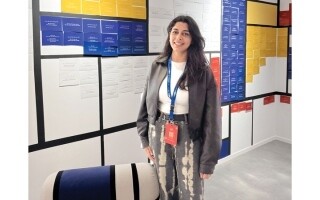
Artist Aliya Omran Al Jassmi presented a project on social pressure, where visitors interact with sculptures connected to electricity, and their interaction is reflected on a giant screen. Artist Juliana Atallah created an art room inspired by Piet Mondrian's work, where space transforms into an interactive interface that reveals how language, identity, and meaning are collectively formed across generations and contemporary communication patterns.
Mariem Al Qasimi worked on Emirati memory and folktales. She chose three characters well-known from folktales: Umm Al Duwais, Hamarat Al Qaila, and Abu Dria. She emphasized the importance of oral tradition, as there is a significant variation in the transmission of stories and their details. These works reflect the interest of artists, particularly Emiratis, in exploring the relationship between art, society, and identity through contemporary methods, transforming the audience into an integral part of the experience.