The economies of the Gulf Cooperation Council (GCC) countries continued to grow, showing positive performance in the third quarter of 2025, an indicator that reflects the ongoing improvement in the ability of Gulf economies to balance the role of the oil sector with enhancing the contribution of non-oil activities to the Gross Domestic Product (GDP).
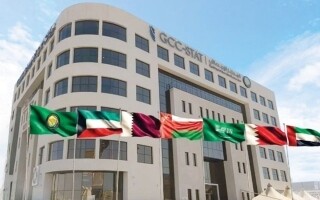
According to the weekly bulletin issued by the Statistical Center of the Gulf Cooperation Council countries, the GCC's nominal GDP reached approximately 595 billion US dollars in the third quarter of 2025, achieving an annual growth rate of 2.2% compared to the same period in 2024.
The data reveals that this growth was not limited to nominal indicators only but also extended to the real GDP at constant prices, which reached 474 billion US dollars during Q3 2025, marking an annual increase of 5.2% compared to Q3 2024. This reflects a genuine improvement in Gulf economic activity, beyond the effects of price changes alone.
The bulletin also showed that all GCC economies achieved positive real growth rates during the same period, reinforcing the picture of economic stability at the regional level.
The GCC economies continue to gradually consolidate their path of economic diversification. Although oil and gas extraction activities remained the leading sectoral contributor at 22% of the total nominal GDP in Q3 2025, the contributions of non-oil sectors were notable and impactful; manufacturing industries recorded 12.4%, followed by wholesale and retail trade at 9.7%, then construction at 8.4%, alongside public administration and defense at 7.5%, and financial and insurance activities at 7.0%, and real estate activities at 5.8%, while other activities collectively accounted for 27.3%. This composition clearly shows that the production base in GCC countries has become broader and less dependent on a single sector, despite the continued central importance of oil and gas.
The most important revelation from these data is that economic diversification in the Gulf is no longer just a declared strategic goal but is being tangibly translated into the structure of the GDP. The presence of significant contributions from manufacturing, trade, construction, financial, and real estate activities indicates clear progress in building alternative and supporting growth engines for the oil sector. At the same time, the continued presence of oil and gas as a key component at 22% shows that the ongoing transition is a gradual and balanced one, based on maximizing returns from traditional resources while simultaneously expanding the non-oil economic base.
Collectively, these numbers paint a positive picture of the Gulf economy in the third quarter of 2025, characterized by continuous growth, strong real expansion, and increased participation of non-oil sectors in the economic mix. They also reinforce the view that economic diversification in the GCC countries is moving forward at a deliberate, yet tangible, pace.