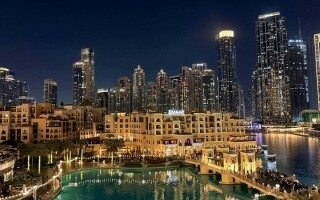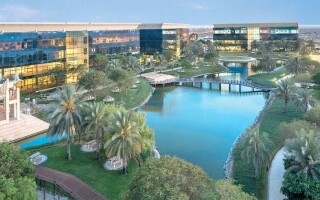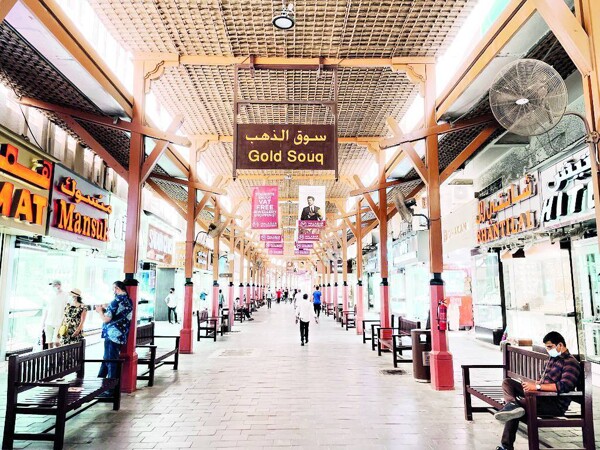
In 2025, the real estate sector in the UAE witnessed significant development, marked by the announcement of several major projects that transcend traditional development concepts to offer models of complete and sustainable cities. These cities integrate living, working, leisure, and services within a single ecosystem. Real estate experts assert that the massive investments in these projects signal a new phase and a qualitative leap in urban development, focused on building integrated and sustainable communities capable of meeting the needs of both residents and investors. They note that integrated cities typically experience stronger and more stable demand compared to traditional projects, as they attract a broader range of buyers for both living and investment purposes. Integrated and sustainable cities are considered a hallmark of the future of real estate in the UAE, especially in Dubai. In detail, Mohammed bin Ghati, Chairman of the Board of Directors of 'Ben Gati Real Estate', emphasized that 'integrated cities are a cornerstone in Dubai's development'. He pointed out that the entire world is strongly moving towards this model of community. Bin Ghati added that 'today's resident does not settle for just a housing unit; they seek a comprehensive living experience that includes schools, services, sports and recreational facilities, and other daily needs'. 'This is what we, as developers, strive to provide, aiming to offer a comprehensive service to the client that combines comfort, quality of life, and flexibility,' he added. He explained that major projects based on the integrated city concept are not just real estate but a qualitative leap in the market that redefines the real estate map of the UAE and sets new standards for sustainability and integration among different community elements. Mohammed bin Ghati also announced that their company's city under the 'Mercedes-Benz' brand aligns with this trend, confirming that 'partnerships with global brands aim to create a unique and distinguished real estate product that enhances the competitiveness of Dubai's real estate market'. Meanwhile, Farhad Azizi, CEO of 'Azizi Developments', stated that 'the real estate market in Dubai is witnessing a clear shift in the preferences of residents and investors towards more integrated and sustainable lifestyles'. Demand is no longer limited to owning a residential unit but is moving towards a comprehensive environment that combines living, working, leisure, and daily services in one place. He added that this trend reflects the market's maturity and increasing buyer awareness, as well as the requirements of investors seeking projects capable of preserving their value in the long term. Azizi noted that integrated cities offer a more balanced living experience, reduce daily reliance on commuting, and contribute to building vibrant communities that support quality of life, in line with Dubai's vision for sustainable urban development. He emphasized that integrated cities usually see stronger and more stable demand compared to traditional projects due to their ability to attract a wider range of buyers for both living and investment. 'This sustainable demand positively impacts prices through balanced growth based on the project's actual use, not short-term price spikes,' he added. He explained that the diversity of real estate within these communities—residential, commercial, hospitality, and leisure—enhances liquidity, mitigates market fluctuations, and gives projects greater resilience to retain their appeal across different real estate cycles. Farhad Azizi also stressed that integrated cities are a key feature of the future of real estate in the UAE, particularly in Dubai, where urban planning vision intersects with demographic and economic growth requirements. He clarified that this model does not replace traditional residential projects but offers a more comprehensive alternative suited to modern lifestyles and aligned with global trends in developing smart and sustainable cities. He added that the continuous government support for infrastructure, transport, and services boosts the success potential of such projects, enabling them to play a pivotal role in the next phase of the real estate market's evolution. In this context, the group's 'Azizi Milan' project stands at the forefront. It is an integrated city inspired by the Italian lifestyle, spanning approximately 40 million square feet with investments exceeding 75 billion dirhams, and is expected to accommodate around 144,000 people. Farhad Azizi confirmed that the return on integrated projects is measured not only by the selling price but by a comprehensive system of added value, including rising demand, diversified income sources, continuous occupancy, and long-term capital appreciation. He explained that 'Azizi Milan' is a long-term investment in a self-sufficient city that creates sustainable opportunities for rental and commercial income and enhances its appeal at various market stages. He added that integrated cities help redistribute demand within the emirate by creating new centers of attraction that reduce pressure on traditional areas, opening new demographic and economic horizons that support price stability and provide a wider range of choices for buyers according to their needs and diverse lifestyles. Azizi underscored that 'the sustainability of integrated cities stems from long-term planning, diversified land uses, quality infrastructure, and attention to residents' daily experiences'. On another front, Amer Zaabi, CEO of Tiger Engineering, stated that 'developers' trend towards building integrated cities will reshape the demand map by attracting new segments seeking a ready-to-live-in housing solution without additional burdens, and raising quality standards in terms of finishing, furnishing, amenities, and services, creating a new pricing benchmark based on the value of integrated living and operational quality, not just the price'. He added that the company's decision to launch an integrated city in Ajman was a response to the evolution of market needs, as individuals no longer limit themselves to buying a residential unit but are searching for a comprehensive and move-in life experience from day one. He pointed out that the gap the company's team identified in the market was clear: 'There are good projects in terms of construction, but they lack real integration between housing, daily services, leisure, green spaces, in addition to weak post-sales service and community management systems'. Zaabi explained that the city's total investment value reaches 10 billion dollars (36.7 billion dirhams), which will be injected in phased stages covering infrastructure, development, amenities, and community operations, along with long-term post-sales services. He added: 'The investment return is achieved through several key axes, including asset value appreciation as development phases are completed and the city becomes fully operational, sustainable operational income from commercial and service activities within the city, in addition to strong and stable rental demand due to the units being fully furnished and backed by professional management and post-sales service'. He continued: 'We expect attractive returns in the medium term with the delivery of the first phases, and strategic long-term returns as the city matures as a sought-after community for living and investment'. In turn, Yousuf Ahmad Al Mutwa, CEO of Real Estate at Shorooq, stated that 'buyers in the UAE real estate market today possess a high degree of awareness and maturity in their purchasing decisions, as they view real estate from a long-term perspective, considering factors like health, sustainability, community quality of life, in addition to operational and maintenance costs'. He noted that the launch of 'Sharjah Sustainable City 2' extends the great success of 'Sharjah Sustainable City 1', launched in 2019 as the first sustainable residential community in the emirate of Sharjah, which was introduced to address the gap between aspiration and reality in the real estate market. Al Mutwa confirmed that 'quality of design is no longer the sole criterion for families; the focus has now shifted to sustainability, cost efficiency, quality of the living environment, and belonging to a vibrant, integrated community'. He noted that investors, in turn, are looking for real estate assets that retain their value and suitability for the future, possessing flexibility and long-term sustainability. He added that the project's development aligns with the leadership's vision for the emirate of Sharjah and is a response to strong market demand, aiming to expand the concept of sustainable living and meet the growing demand for low-carbon integrated communities, and to enhance the emirate's long-term commitment to sustainability and quality of life, as well as to develop flexible projects capable of meeting future requirements. Al Mutwa affirmed that 'human well-being remains the compass guiding the project's development', emphasizing that the work is focused on creating world-class communities that are happy, sustainable, and contribute to minimizing the environmental footprint to the lowest possible level, while maximizing the added value to residents' daily lives through gardens, bike tracks, extensive green spaces, in addition to community initiatives like the agricultural zones initiative that enhances social cohesion and encourages healthy lifestyles. He stressed that 'sustainable cities have become the benchmark model for the future of real estate due to their pivotal role in achieving a balance between economic growth, the social dimension, and environmental sustainability'. He explained that projects like 'Sharjah Sustainable City 2' prove the possibility of combining ease of living, community spirit, cultural identity, and environmental awareness within one integrated framework. He added that these cities directly align with the UAE's national goals, including the 2050 Climate Neutrality Initiative and the UN's Sustainable Development Goals, by transforming strategic visions into practical, on-the-ground models. Al Mutwa clarified that sustainable cities contribute to human development by offering healthier lifestyles, more cohesive communities, and an urban environment that encourages walking and interaction with nature, in addition to opening new economic horizons in green technologies, eco-tourism, and sustainable infrastructure. In the same context, Omar Darbas, CEO of Development and Engineering at Palma Development, stated that 'the shift towards integrated cities is linked to changing market needs and reflects a deeper evolution in the concept of housing itself'. He confirmed that individuals are seeking environments that are meticulously managed and designed to serve a balanced lifestyle, where daily details, from health and tranquility to privacy and ease of movement, become part of the real estate's value. He noted that integrated cities represent a transition from a project-centric to a community-centric concept, where housing is viewed as a long-term living space, not just an asset. This trend reflects the market's maturity and a growing awareness of the importance of integrated planning in building sustainable and livable communities. Darbas pointed out that integrated cities redefine the nature of demand in the market, attracting a segment seeking stability and quality alongside quick returns. He emphasized that this type of demand is characterized by continuity, creating a more balanced price dynamic. Instead of sharp fluctuations, these projects contribute to a gradual build-up of value derived from quality of life, service integration, and residential community stability. Over time, these cities become benchmark points in the market against which the quality of other projects is measured. Darbas explained that 'integrated cities are not an alternative to all forms of development, but they form one of the main pathways for the future of urban development in the UAE, where this model aligns with the country's vision of developing more efficient and sustainable cities built on the actual needs of residents'. He added that his company launched the 'Serenea District' project on Jumeirah Islands, which stands as one of the prime examples of the company's vision of building integrated communities with a deep human touch, with a market value of 5 billion dirhams. Major Projects for Integrated Cities: 2025 saw the announcement of several major projects for integrated and sustainable cities by leading developers across the country, including: 'Dubai Mansions' by Emaar Properties valued at 100 billion dirhams, 'Mercedes-Benz' by BenGati Real Estate with investments estimated at around 30 billion dirhams, 'Tiger Downtown Ajman' by Tiger Real Estate with investments of 36.7 billion dirhams, 'Downtown Umm Al Quwain' by Shoba Real Estate with investments of 73.4 billion dirhams, in addition to 'Sharjah Sustainable City 2' by Shorooq. The massive investment in integrated cities indicates a new phase in urban development, focused on building communities capable of meeting the needs of residents and investors.